Paediatric Lymphoma · Precision Chemotherapy · 15 May 2026
Patient Voices | A teenager with T-lymphoblastic lymphoma travels north for treatment and reaches CR — his father becomes a "research-minded parent"
Diagnosis
T-lymphoblastic lymphoma (T-LBL), re-staged as stage III CNS2
Age
15 years old
Treatment
BFM-modified CNCL-NHL-2017-LBL high-risk paediatric protocol; VDLP induction combined with bortezomib
Hospital
Beijing GoBroad Boren Hospital — Dept. of Haematology III (Paediatric Haematology/Oncology)
Latest status
Sustained deep remission; in maintenance therapy (February 2026)
Key message
Multi-dimensional prognostic assessment and precise risk stratification can raise the cure rate of T-LBL above 80%
In January 2025, 15-year-old Xiao Hao (a pseudonym) from Jiangsu was diagnosed with T-lymphoblastic lymphoma. After completing four cycles of chemotherapy at his local hospital, the family travelled from Jiangsu to the paediatric haematology/oncology department of Beijing Boren Hospital in search of definitive treatment.
Prof. Zhang Yonghong's team designed an individualised diagnostic and treatment plan tailored to Xiao Hao's disease, managed in fine detail from start to finish. After nearly a year of standardised, systematic treatment, Xiao Hao is now in sustained deep remission, has smoothly entered the maintenance phase, and is moving steadily towards recovery.
A lump appears on a 15-year-old's neck — an unexpected malignancy
Just after the New Year holiday in 2025, we received a call from the high school our son Xiao Hao attends. His teacher said there was a fairly large lump on the boy's neck and advised us to take him to hospital as soon as possible.
We did not dare delay for a moment and took him to the local hospital straight away. Xiao Hao had an ultrasound and then a CT scan; the results showed enlarged cervical lymph nodes and enlarged nodes at multiple sites throughout the body. The doctor advised an immediate transfer to a higher-level hospital.
We took Xiao Hao to a provincial hospital at once. During the days of waiting for the pathology result I barely slept; every minute was stretched out. Finally the report came: T-lymphoblastic lymphoma, stage II group A.
A 15-year-old boy, the exam paper of his life barely unrolled, and fate handed him the hardest question of all. From the moment we received that report, our quiet, settled family life was completely rewritten.
Chemotherapy shows early effect — heading north for standardised care
At the provincial hospital, doctors started chemotherapy quickly. The first two cycles worked well and the mediastinal tumour shrank by 65%. But we did not dare relax — T-LBL is difficult to treat, its prognosis uncertain, and the risk of relapse cannot be ignored. In particular, Xiao Hao was not being treated with a standardised paediatric protocol but with a modified adult regimen, which left us deeply worried about how standardised the treatment was and about long-term results.
During that period I began reading everything I could find on T-LBL: Chinese literature, English guidelines, clinical studies, patient forums — anything related, I studied word by word, trying to find the most suitable direction for my child among the flood of information. It was in this process that I came across Prof. Zhang Yonghong. As a leading authority in paediatric lymphoma in China, she founded the national Chinese Net Childhood Lymphoma collaborative group and has extremely rich clinical experience in the standardised treatment of paediatric T-LBL and in difficult, severe cases.
My wife and I also learned from other families and clinical cases that for T-LBL you either go to Shanghai or come to Beijing. In the end we chose Prof. Zhang Yonghong's team in Beijing. We agreed that in this field her academic standing and clinical strength were what we trusted most and where we could best place our hope.
In April 2025, after Xiao Hao finished his fourth cycle of chemotherapy at the provincial hospital, we immediately took him to Beijing and began a new stage of the journey.
Switching to a paediatric protocol — precise treatment builds the line of defence
In May 2025 we brought Xiao Hao to Boren Hospital. On admission, Prof. Zhang Yonghong's team immediately completed his work-up and invited Prof. Zhou Chunju to review his recent outside PET/CT, which showed residual mediastinal disease but no progression. Given that he is an adolescent and had a bulky mediastinal mass, the team applied the International Paediatric Non-Hodgkin Lymphoma Staging System (IPNHLSS) and re-classified the disease as stage III CNS2.
Continuing with an adult protocol would have meant a lower remission rate and a higher risk of relapse. After a comprehensive review, the team rapidly optimised and adjusted the strategy — replacing the modified adult regimen with the CNCL-NHL-2017-LBL high-risk protocol designed for children and adolescents, starting VDLP chemotherapy at induction and adding bortezomib to improve steroid sensitivity, laying a firmer foundation for the treatment that followed.
Accompanying my son through treatment and studying constantly, I gradually understood that paediatric and adult lymphoma differ enormously in how they should be treated. Whether the staging is accurate, whether the protocol is standardised, and whether it fits the physiology of children and adolescents may directly determine long-term prognosis and relapse risk.
Two weeks into induction chemotherapy, MRI showed the residual mediastinal lesion had shrunk markedly again, with no progression right up to discharge. That result convinced us our choice had been right.
Taking into account the bulky tumour indicated by earlier pathological staging, the possibility that the tumour was still active on arrival in Beijing, and several adverse prognostic mutations found on genetic testing, Prof. Zhang Yonghong's team finally decided to treat with the high-risk protocol.
During chemotherapy one trial followed another: myelosuppression, infection and fever, mouth ulcers, drug-induced liver injury, coagulation abnormalities… each one was agonising. Fortunately, Prof. Zhang Yonghong's team stayed calm, treated promptly, and carried us safely through every crisis.
In early February 2026, under precisely stratified, standardised treatment by the expert team, Xiao Hao achieved a marked response — sustained deep remission — and moved smoothly into maintenance therapy. On discharge day, seeing how happy and lively he was, all the running around and suffering finally found its resting place, and I looked forward to walking with him, step by steady step, towards recovery.

Becoming a "research-minded parent" — core lessons from the fight
Over the year accompanying Xiao Hao's treatment, I grew from anxious and helpless into what other families call a "research-minded parent". This also has to do with my job in data analysis; in my spare time I am a blogger with more than 50,000 followers and share my analyses. So I am used to organising treatment details rationally and rigorously, and this road has been clearer and steadier for it. Let me share the key lessons of this period, so that real experience can help more families in difficulty.
1. Choosing the right expert team can matter more than choosing the hospital. Xiao Hao's treatment at the provincial hospital was reasonably effective, yet I insisted on taking him north — only to find the team most experienced in paediatric T-LBL. At Boren, Prof. Zhang Yonghong's team truly delivered precise stratification, individualised treatment and a tight rhythm: as soon as the child's parameters allowed, the next stage began without delay.
Through national patient groups I met many parents and learned that some children had treatment interrupted or medication delayed before remission was achieved, making it easy for tumour cells to develop resistance — a great pity. For a highly aggressive haematological malignancy like T-LBL, timeliness and standardisation are critical, and an experienced team can make the most accurate judgement at the decisive moment. The team also uses genetic testing for precise subtyping, drug guidance and risk prediction, making treatment more scientific and more individualised.
2. Infection is never a small matter — prevention beats rescue. Xiao Hao had two infections at the provincial hospital, influenza A and influenza B, mainly because the wards were crowded and protection was difficult. During post-chemotherapy myelosuppression a child's immunity is extremely low, and one severe infection can interrupt chemotherapy, worsen the disease, increase costs and even threaten life. In my view, lower cross-infection risk is what makes intensive chemotherapy safe.
3. Nutrition is the bottom line — eating well is what lets you withstand treatment. During chemotherapy he had a poor appetite, nausea and bloating and needed a low-fat diet, so I worked on appetising low-fat recipes: braised chicken made with additive-free seasoning, a non-spicy version of "mao xue wang", and so on; I also found additive-free sparkling water eased the bloating after medication. Ultimately, recovery needs nutrition: white-cell recovery and haematopoietic repair both depend on protein and nutritional support. With the doctor's permission, and as long as it does not affect treatment or burden the liver and kidneys, I also give him safe supplements. They cannot replace proper treatment, but they help with the nutritional gaps that dietary restrictions cause.
4. Mindset is not mysticism — it is part of the treatment. At the provincial hospital most people in the ward were middle-aged or elderly and the atmosphere was rather heavy. After moving to Boren, Xiao Hao's ward was mostly children, the environment livelier at once, and his mood was visibly different. The hospital often organises activities — birthday parties, craft classes, charity donations — and Xiao Hao received gifts several times. Although he can hardly be called a "little child" any more, the joy on his face each time he received one could not be hidden. A positive, optimistic mindset seems intangible, yet it genuinely carried him through round after round of treatment.
Looking back on this near-year, hard as it was, it made our family see life anew. We changed our diet and daily rhythm along with him, and learned to find certainty within uncertainty. As I shared what I had learned bit by bit, I gradually found that helping others is also a way of healing yourself.
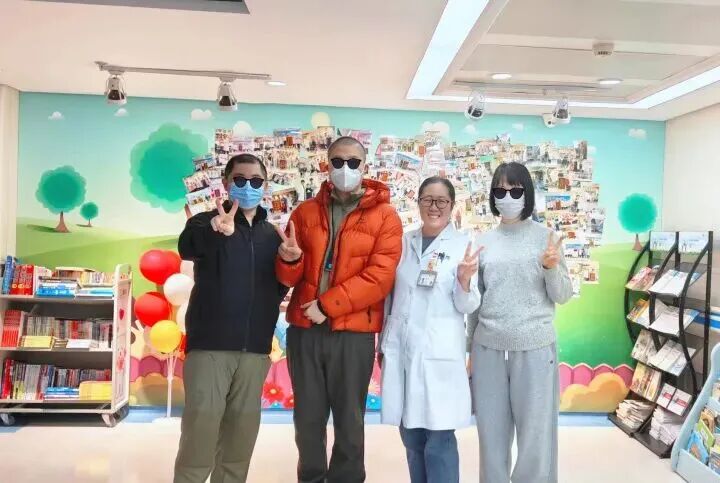
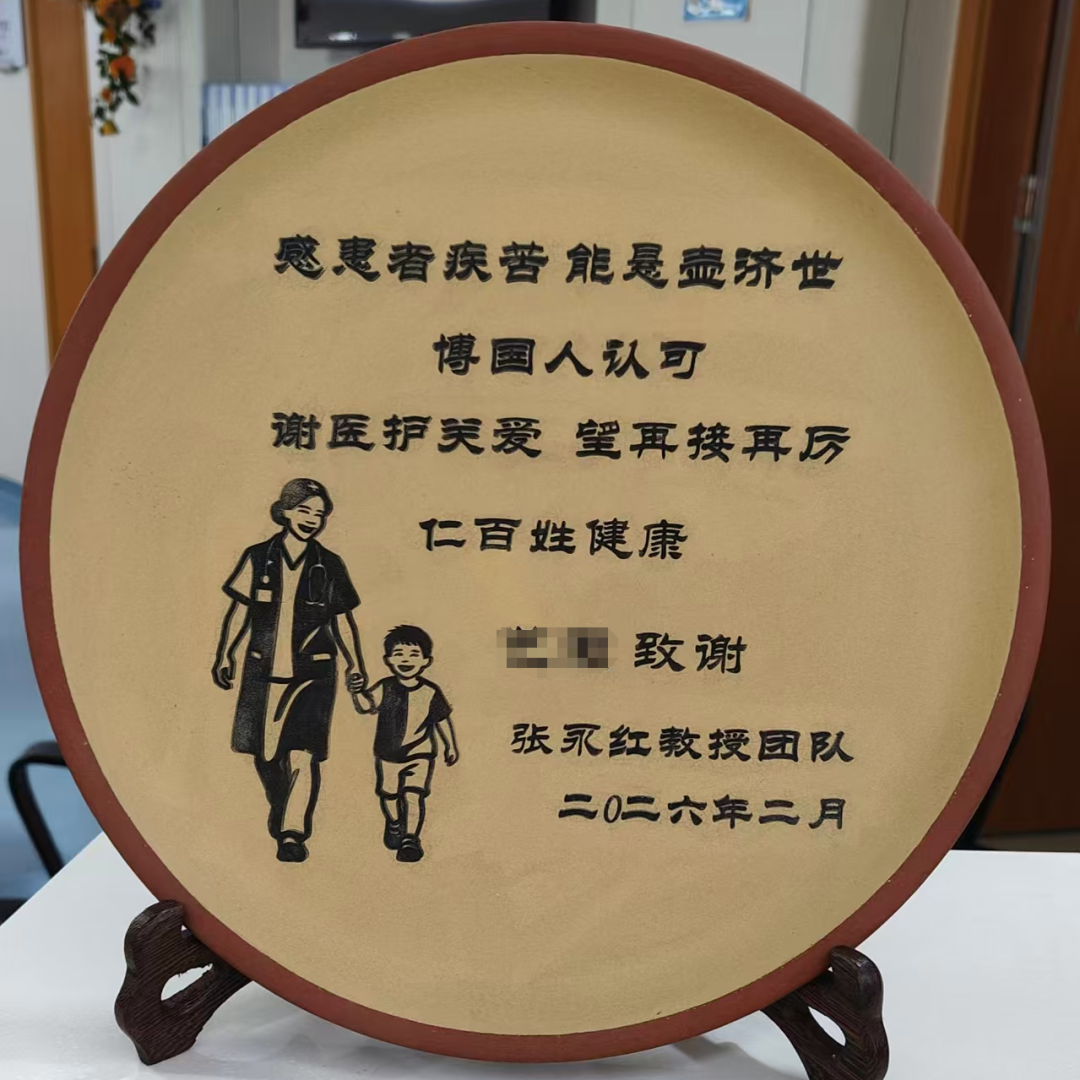
The road ahead is long, but for now the spring sunshine has reached our lives. Xiao Hao is better by the day, and our hearts are full of new joy and hope. We sincerely thank Prof. Zhang Yonghong's team for their skill and devoted care, thank everyone who reached out to help us, and hope our experience can bring a little light and confidence to families still in the storm.
The specialist's view
Xiao Hao presented with a bulky mediastinal mass and was diagnosed with T-lymphoblastic lymphoma, stage II group A, in an adult haematology department at his local hospital, receiving two cycles of Hyper-CVAD plus pegaspargase on an adult protocol. No lumbar puncture with intrathecal injection was performed at the start of chemotherapy, and only one intrathecal injection was given subsequently. After the last cycle, treatment stopped for 37 days because of a lung infection. Repeat PET/CT still showed residual mediastinal disease.
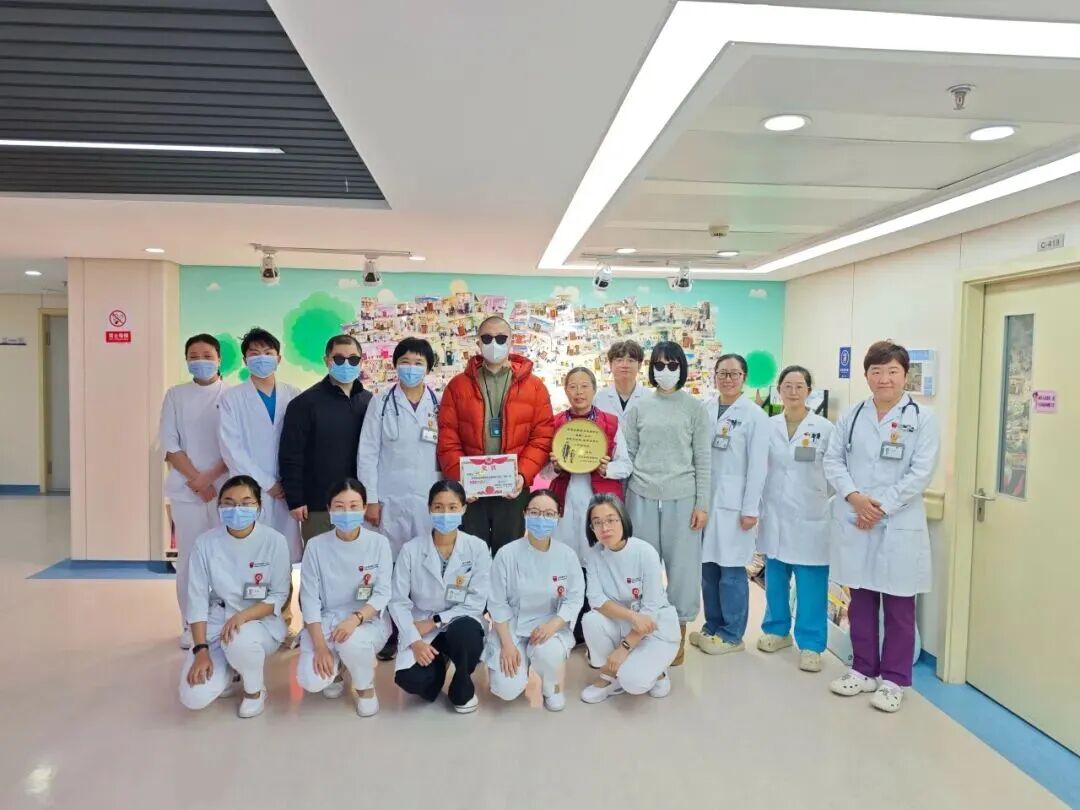
After arriving at Boren Hospital, pathology review by Director Zhou Chunju confirmed T-lymphoblastic lymphoma and excluded an early-T immunophenotype. Given that he is an adolescent with a bulky mediastinal mass, under the International Paediatric Non-Hodgkin Lymphoma Staging System (IPNHLSS) he should be classified as stage III CNS2. Review of the MRI, CT and PET/CT provided by the outside hospital, together with our own MRI, showed the tumour continuing to shrink without progression, with only a small, low-activity residual mediastinal lesion. His original outside pathology tissue was sent for RNAseq and tumour-related mutation screening to identify adverse prognostic genes.
In summary, the patient had the following high-risk factors: (1) he should have been treated on a paediatric/adolescent T-LBL protocol, but the outside hospital used an adult regimen, with no intrathecal injection on the day of chemotherapy and clearly insufficient intrathecal injections thereafter, increasing the risk of CNS relapse; (2) there was a significant treatment delay after the last cycle, increasing the risk of progression/relapse; (3) the tumour tissue carried adverse prognostic mutations including JAK3 and TP53.
In view of these adverse prognostic factors, treatment was switched to the BFM-modified CNCL-NHL-2017-LBL high-risk protocol, adding the proteasome inhibitor bortezomib to VDLP induction to reduce the risk of resistance. Interim assessment showed complete remission; the indication for allogeneic haematopoietic stem cell transplant in first remission was excluded, sequential chemotherapy continued, and he has now entered the maintenance phase.
A precisely stratified treatment strategy based on multi-dimensional prognostic assessment is the key to improving the cure rate of T-LBL, raising it above 80%. It suits not only children and adolescents but also young adults under 25. We hope this case reminds adolescent lymphoblastic lymphoma patients over the age of 14 to seek early diagnosis, early treatment and standardised management in a paediatric haematology-oncology department, for the best chance of cure.
— Director Liu Ying, Prof. Zhang Yonghong's team. (This article is based on an account by the patient's family; pseudonyms are used to protect privacy. Individual conditions vary greatly — please always follow your own doctor's advice on treatment.)
The wider medical team


Treatment timeline
- Jan 2025A lump found on the neck at school; ultrasound and CT show widespread lymphadenopathy; pathology confirms T-lymphoblastic lymphoma, stage II group A
- Jan–Apr 2025Four cycles of adult-protocol chemotherapy at a provincial hospital (Hyper-CVAD + pegaspargase); mediastinal tumour shrinks 65%, but intrathecal therapy is insufficient and treatment is delayed 37 days by lung infection
- May 2025Admitted to Beijing GoBroad Boren Hospital; pathology review and IPNHLSS re-staging to stage III CNS2; switched to the paediatric CNCL-NHL-2017-LBL high-risk protocol with VDLP induction plus bortezomib
- Jun 2025Two weeks into induction, MRI shows the residual mediastinal lesion markedly smaller with no progression; RNAseq detects adverse JAK3 and TP53 mutations
- 2025Sequential chemotherapy through myelosuppression, febrile infection, mouth ulcers, drug-induced liver injury and coagulation abnormalities; interim assessment shows complete remission, allogeneic transplant not indicated
- Feb 2026Sustained deep remission achieved; discharged and entering maintenance therapy, moving steadily towards recovery
About the specialist
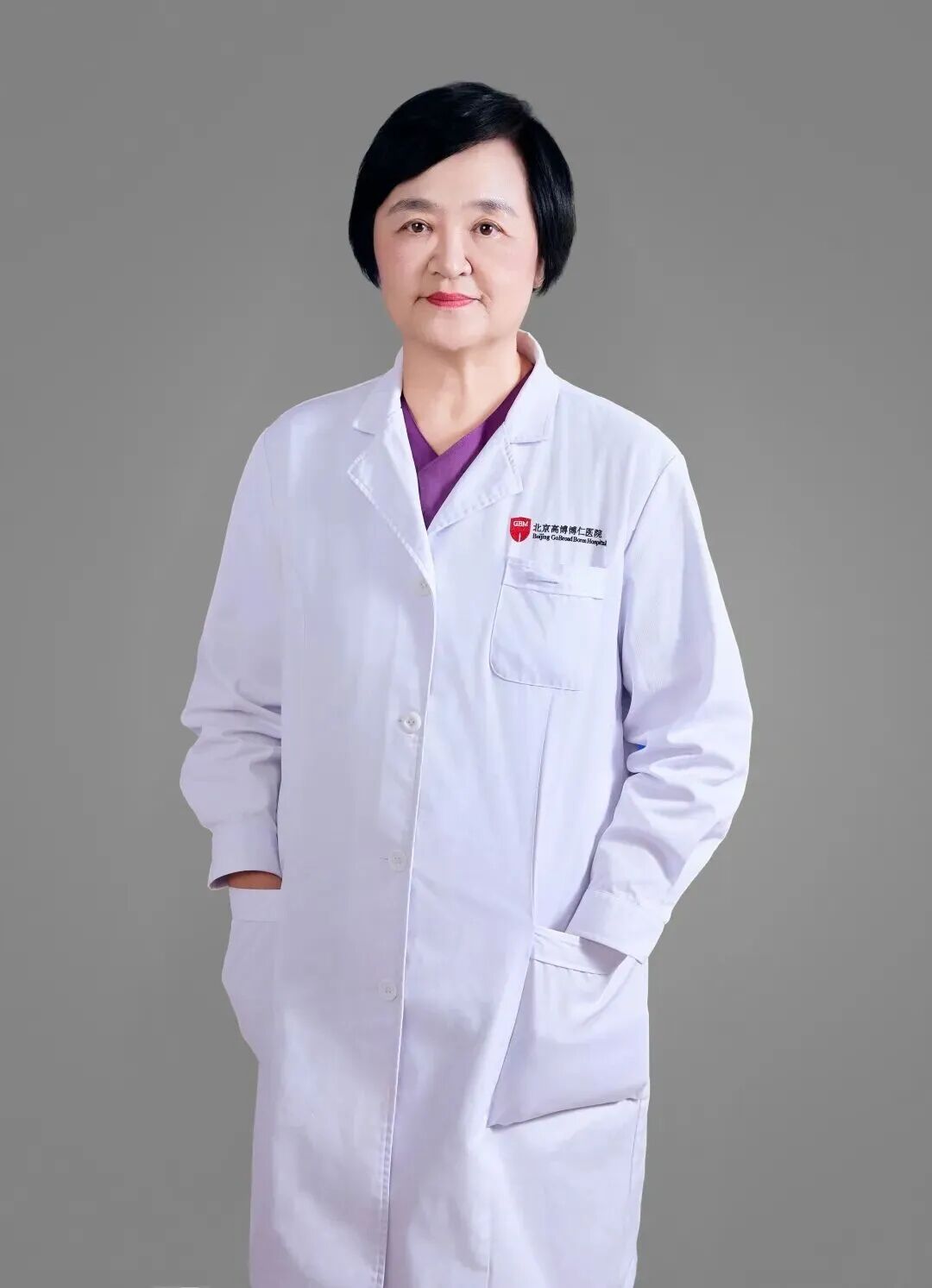
Prof. Zhang Yonghong
- · Chief Physician and Professor, Beijing GoBroad Boren Hospital
- · Medical Director of Beijing GoBroad Boren Hospital and Head of Haematology III (Paediatric Haematology/Oncology), GoBroad Medical (Haematology) Beijing Research Centre
- · Former Head of the Lymphoma Department, Beijing Children's Hospital, Capital Medical University
- · 43 years in paediatric haematology-oncology since joining Beijing Children's Hospital in 1983; founded its lymphoma specialty in 2003 and led the national Chinese Net Childhood Lymphoma group (CNCL) from 2017
- · Pioneered internationally aligned finely stratified chemotherapy in China, lifting the overall cure rate of childhood lymphoma to 80–90%
- · Over 130 papers in journals including Blood and Blood Advances; author of 10 professional books; visiting scholar at St. Jude, MD Anderson and the Prince of Wales Hospital, CUHK (1999–2004)
- · Editor-in-Chief, Chinese Journal of Pediatric Blood and Cancer; Deputy Head, CSCO Anti-Lymphoma Alliance Paediatric Group
Source: Beijing GoBroad Boren Hospital / GoBroad Medical Forum