WhatsApp · 24/7 English Support
Neuroscience Program

Neuroscience Diagnosis & Treatment · Reshaping Neurological Health

The Neuroscience Center of GoBroad Healthcare Group provides advanced functional neurosurgery for patients worldwide — integrated diagnosis and treatment combining functional neurosurgery and neuromodulation for movement disorders such as Parkinson's disease, essential tremor, and epilepsy, from diagnostic evaluation and surgical treatment to long-term follow-up management.

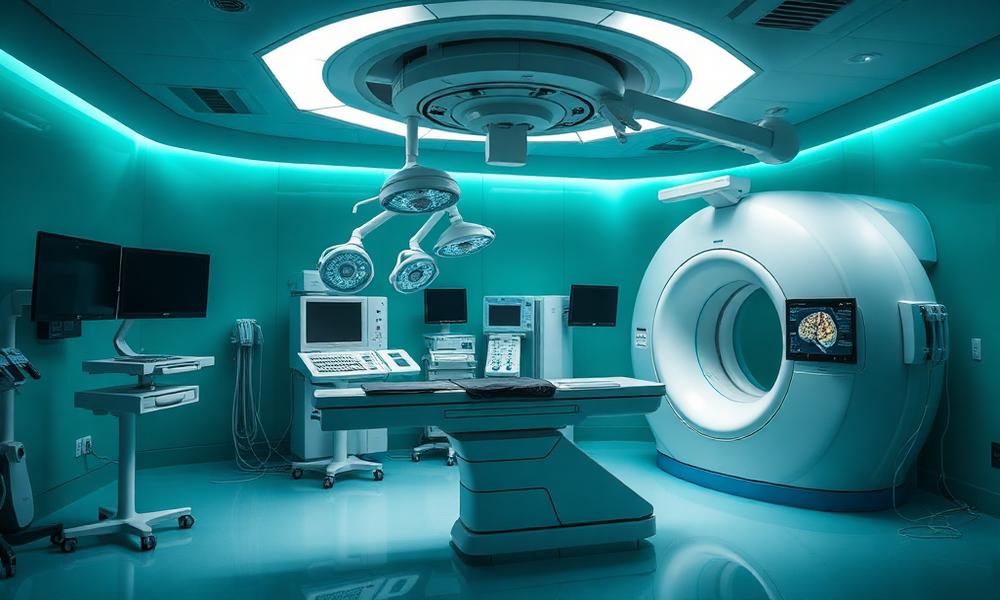
MRI-guided neurosurgery suite with advanced neuro-navigation equipment

Core Technology Platforms

01

DBS · Deep Brain Stimulation

The "Brain Pacemaker" · Adjustable & Reversible Neuromodulation
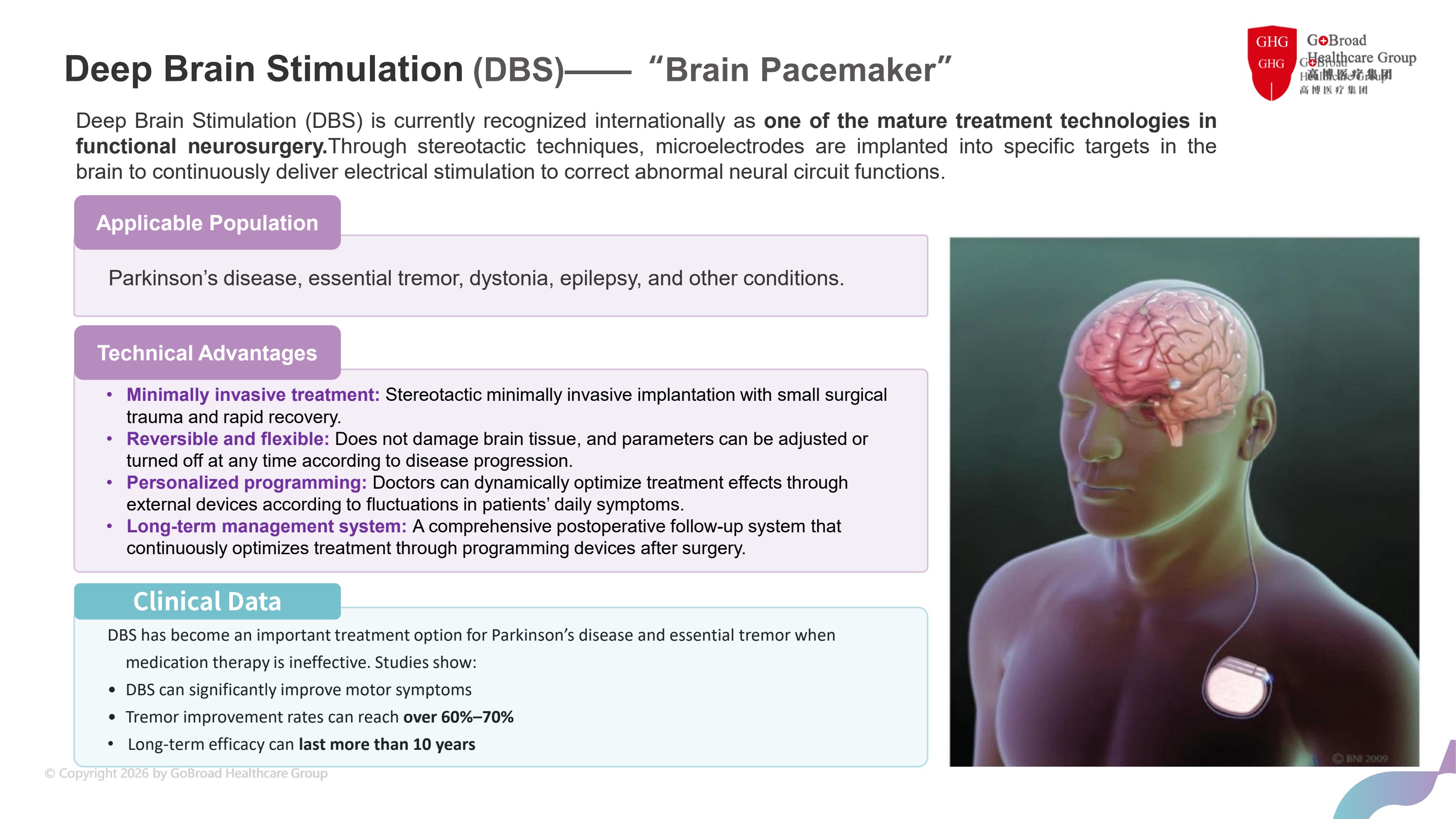
Deep Brain Stimulation diagram — implanted brain pacemaker system

Think of DBS as a pacemaker for the brain. It is a three-part system — electrodes placed in specific brain targets, a pulse generator implanted below the collarbone, and a subcutaneous wire linking them. Electrical pulses travel from the chest, through the wire, to the brain to modulate abnormal neural circuits. Regulation, not destruction — every parameter can be adjusted or switched off at any time.

Minimally invasive, not open craniotomy. Electrodes are placed through a small burr hole using stereotactic navigation; patients are typically awake during electrode testing so the team can confirm effect in real time. General anesthesia is used for pulse generator implantation (and for children or highly anxious patients).
Battery — replace or recharge. When power runs low, the battery is replaced through a small skin procedure. Beijing GoBroad also offers rechargeable pulse generators that charge wirelessly through the skin.
Non-invasive programming. A handheld/tablet programmer placed on the chest communicates wirelessly with the pulse generator to fine-tune voltage/current, frequency, pulse width and active contacts.

Indications at GoBroad

  • Established: Parkinson's disease, essential tremor, dystonia (generalized dystonia, torsion spasm, spasmodic torticollis, Meige syndrome), and other movement disorders.
  • Extended: Drug-refractory epilepsy.
  • Research: Obsessive-compulsive disorder (OCD).
  • Ongoing care: Deep review of DBS efficacy and battery-life management — including upgrading previously implanted patients from non-rechargeable to rechargeable systems.

Technical Advantages

  • Minimally invasive stereotactic implantation with small trauma and rapid recovery
  • Reversible & flexible — parameters adjustable or turned off at any time
  • Personalized programming optimized to daily symptom fluctuations
  • Long-term management with comprehensive postoperative follow-up

Studies show tremor improvement rates of over 60%–70%, with long-term efficacy lasting more than 10 years.
02

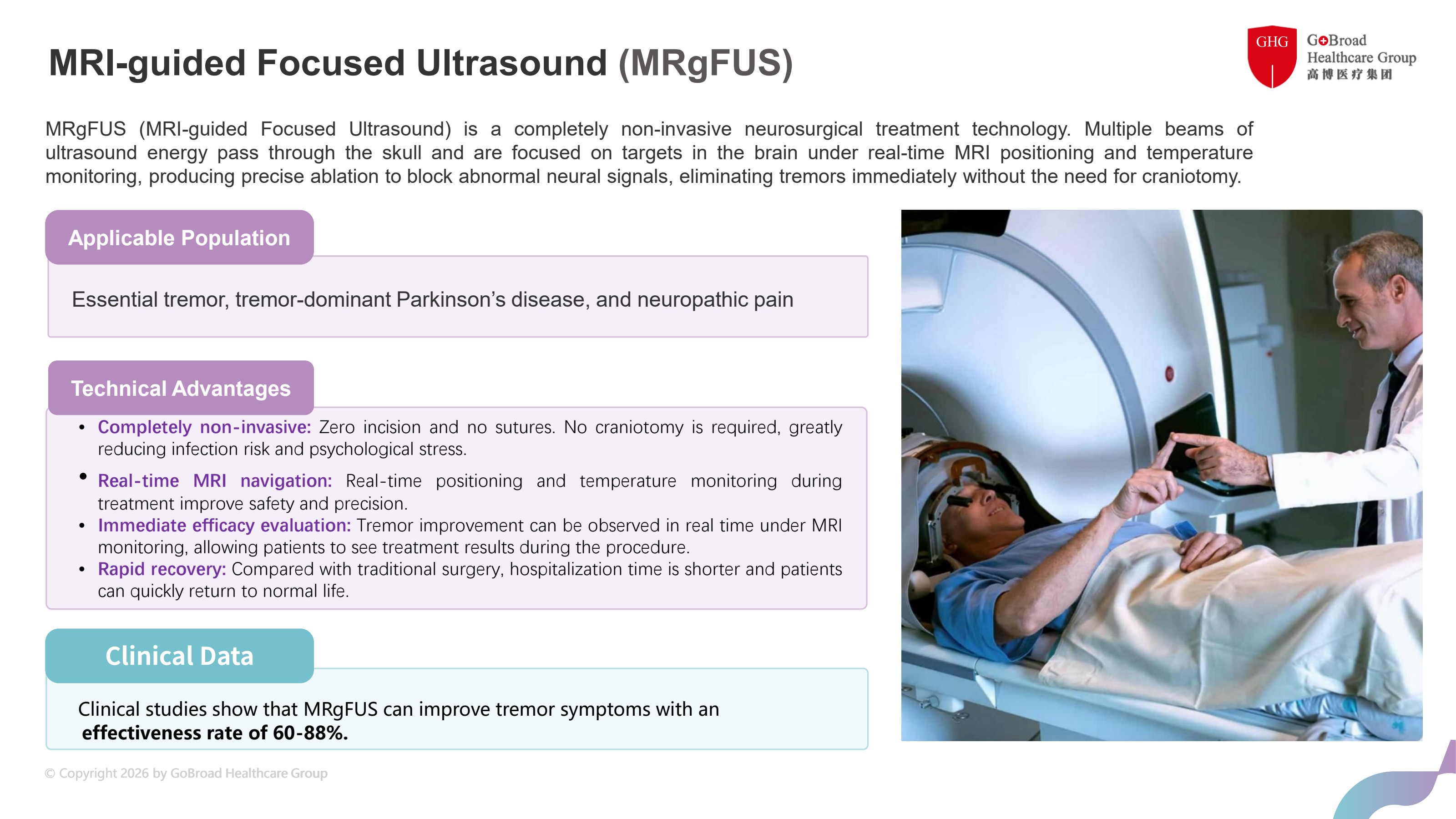
MRgFUS · MRI-guided Focused Ultrasound

Incisionless Ablation · No Craniotomy · No Implant · No General Anesthesia

MRI-guided Focused Ultrasound treatment diagram — non-invasive brain ablation

A completely incisionless treatment: hundreds of focused ultrasound beams pass through the skull (using water as the coupling medium via a sealed helmet) and converge on a millimeter-sized target in the brain. Under real-time MRI guidance and continuous thermometry, the neurosurgeon ablates the abnormal focus while the patient stays fully awake, talking with the team and performing tasks (drawing spirals, moving the hand) so the effect is verified — and refined — during the procedure itself.

Beijing GoBroad is the 7th hospital in China and the 3rd in Beijing to offer MRgFUS therapy.

Indications at GoBroad

Tremor-dominant Parkinson's disease (uncontrollable hand tremor) and essential tremor.

Technical Advantages

  • Completely non-invasive: zero incision, no sutures, no craniotomy
  • Real-time MRI navigation improves safety and precision
  • Immediate efficacy evaluation — results visible during the procedure
  • Rapid recovery with shorter hospitalization

Clinical studies show tremor improvement with an effectiveness rate of 60%–88%.

Treatment Journey & Hospitalization

What actually happens on the day of treatment — and how long you stay.

DBS · Clinical Workflow

  1. 1Fit stereotactic head frame to lock the brain coordinates.
    安裝立體定向頭架,鎖定腦部座標。
  2. 2Intra-operative CT or MRI + computer simulation to confirm targeting.
    術中 CT 或 MRI 結合電腦仿真系統,確認靶點定位。
  3. 3Minimally invasive burr-hole electrode implantation; patient performs simple tasks so the team calibrates the electrode.
    微創鑽孔植入電極;患者配合簡單動作,團隊即時校準電極位置。
  4. 4Post-implant MRI to verify placement.
    植入後複查核磁,確認位置。
  5. 5Implant the pulse generator (under the clavicle) and the subcutaneous wire — completing the DBS system.
    植入脈衝發生器(鎖骨下方)與皮下導線,完成整個 DBS 系統。

Hospitalization. Typically 3 days to 1 week. Some centers complete electrode + pulse generator in a single stage; others stage them (to first assess electrode effect, or to reduce surgical risk). For low-risk patients, same-day discharge is possible after the second-stage battery implantation.

Follow-up. Suture removal at 1 week; the pulse generator is activated 2–4 weeks post-op (to avoid the transient micro-lesion effect from electrode implantation). Regular remote programming visits fine-tune parameters to each patient's optimum.

MRgFUS · Clinical Workflow

  1. 1Fit head frame + silicone membrane + sealed water-filled helmet — water is the optimal medium for ultrasound.
    安裝頭架 + 矽膠膜 + 密封灌水頭盔 — 水是超聲波最佳傳播介質之一。
  2. 2Slide into the MRI scanner; neurosurgeon locates the brain target on MRI.
    進入磁共振成像儀,醫師於 MRI 上確定腦部靶點。
  3. 3Deliver focused ultrasound energy to ablate the target.
    以聚焦超聲能量對靶點進行消融治療。
  4. 4Patient (fully awake) performs tasks — drawing a spiral, moving the hand — so the team evaluates the effect in real time.
    患者全程清醒,完成畫螺旋、活動手部等動作,團隊即時評估治療效果。
  5. 5Steps 3–4 repeat as needed; when the target endpoint is reached, the helmet is removed and the patient is moved to recovery.
    第 3–4 步可依需要重複;達到治療終點後,取下頭盔,送患者至休息室。

Hospitalization. No incisions, no implants, no general anesthesia. Delivered as an outpatient or day-surgery procedure — low-risk patients are usually discharged the same day or the next day.

Follow-up. Short-term transient effects (mild dizziness or gait unsteadiness) are typically reversible. Long-term follow-up combines periodic imaging with symptom-control and quality-of-life assessment.

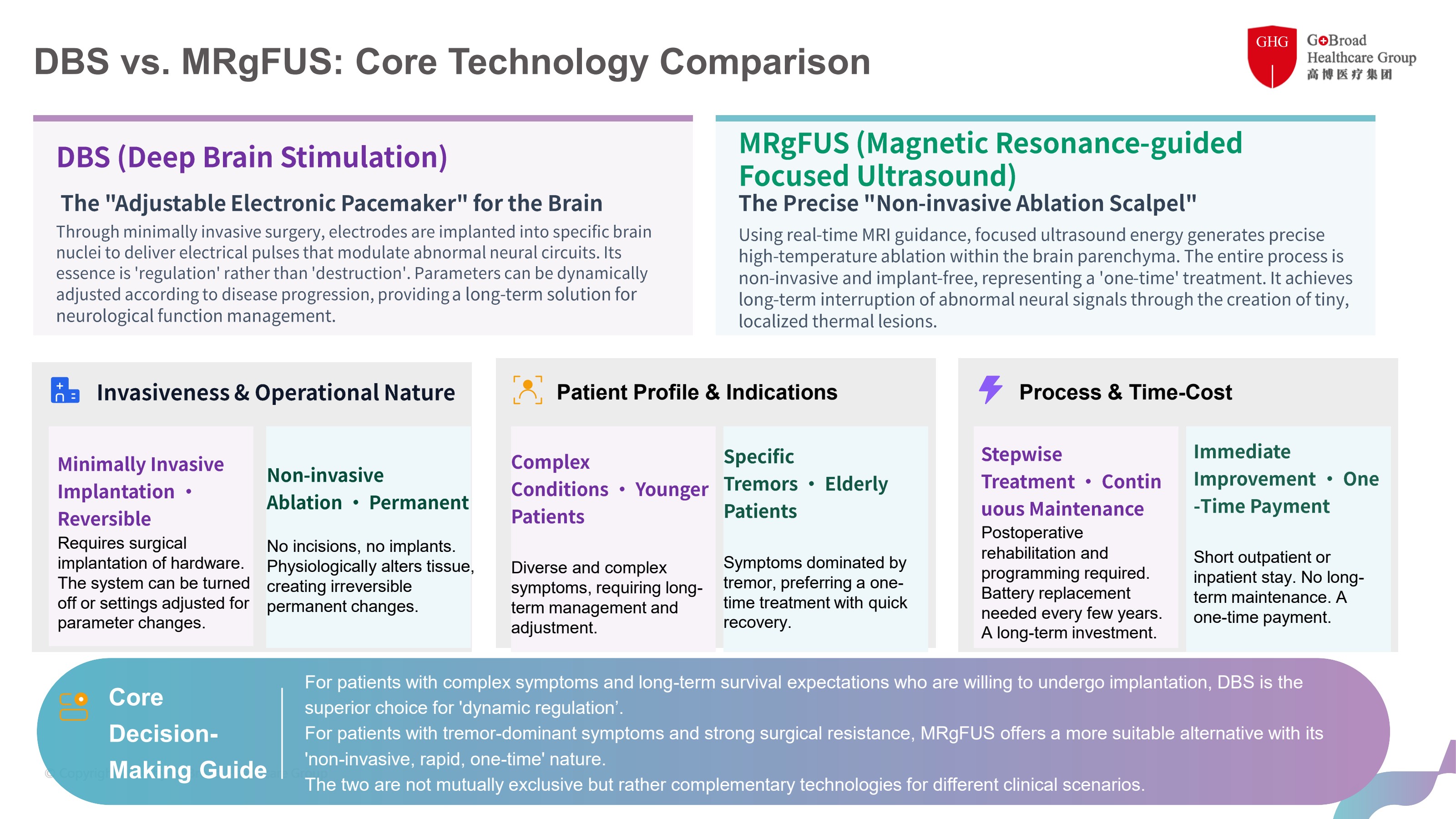
DBS vs. MRgFUS · Core Technology Comparison

Not mutually exclusive — complementary technologies for different clinical scenarios.

DBS vs. MRgFUS core technology comparison diagram

DBS · Minimally Invasive · Reversible

Regulation, not destruction

Invasiveness
Surgical implantation of hardware. Adjustable or turned off.
Patient profile
Complex conditions, younger patients requiring long-term management.
Process & cost
Stepwise treatment, postoperative programming, battery replacement every few years — a long-term investment.

MRgFUS · Non-invasive · Permanent

One-time precise ablation

Invasiveness
No incisions, no implants. Physiologically alters tissue — irreversible.
Patient profile
Tremor-dominant symptoms, elderly patients preferring quick recovery.
Process & cost
Short outpatient or inpatient stay. No long-term maintenance. One-time payment.
Decision guide. For patients with complex symptoms and long survival expectations willing to undergo implantation, DBS is superior for dynamic regulation. For tremor-dominant patients with surgical resistance, MRgFUS is more suitable — non- invasive, rapid, one-time.

Expert Team

Dr. Ling Zhipei

Dr. Ling Zhipei

Chief Physician · Professor · Doctoral Supervisor · Leader of the GHG Neuroscience Clinical Diagnosis, Treatment and Research Center

In August 1998, he completed China's first Parkinson's disease brain pacemaker implantation, introducing neuromodulation technology into China. In March 2019, he led the world's first 5G-based remote brain pacemaker implantation surgery over 3,000 kilometers with a surgical delay of only 79 milliseconds. In September 2020, he established the world's first 5G + holographic remote diagnosis and treatment platform; by 2025, more than 1,000 remote outpatient consultations had been completed.

In 2025, he completed the clinical implantation of a rechargeable sensing brain pacemaker integrating AI algorithms to automatically adjust treatment parameters. His book Stereotactic and Functional Neurosurgery is an important technical guideline in the field.

Dr. Li Jianyu

Dr. Li Jianyu

Chief Physician · Associate Professor · Master's Supervisor · Chief Expert of Functional Neurosurgery at Beijing GoBroad Hospital

Among the first in China to use stereotactic techniques to treat movement disorders, he trained at movement disorder centers in Minneapolis and Florida with Professor Okun. His main research areas include Parkinson's disease, essential tremor, dystonia, and Tourette syndrome, with more than 3,000 surgeries completed.

He has performed nearly 1,000 microvascular decompression surgeries for cranial nerve disorders and has extensive experience treating cerebral palsy, epilepsy, and chronic pain. Member of the Neurosurgery Branch of the Chinese Medical Association.

International Patient Referral & Treatment Process

A dedicated standardized pathway ensuring medical efficiency for overseas patients.

01

Remote Pre-screening

Submit imaging data and medical records for preliminary evaluation by an expert assistant.

02

Multidisciplinary Consultation

Specialists confirm the treatment plan — DBS or MRgFUS — via online consultation.

03

On-site Evaluation in Beijing

Detailed neurological and anesthesia evaluations are conducted upon arrival.

04

Precision Treatment

DBS implantation or MRgFUS ablation performed by leading functional neurosurgeons.

05

Rehabilitation Management

Postoperative monitoring and remote programming follow-ups ensure long-term effectiveness.

Free Case Feasibility Assessment

Start your medical journey to China

Based in Hong Kong and serving international patients, Privilege Medical bridges you to leading Class 3A and JCI-accredited hospitals in mainland China. We do not provide medical care directly — we coordinate specialist matching, medical visa support and on-the-ground concierge from your first enquiry to post-treatment follow-up.

Complete the form below. Our coordination team responds within 1–2 business days with a complimentary assessment covering clinical feasibility, specialist matching and an indicative admission timeline.

Supporting Documents (Optional)

Attach each document below, or tick "Send later" and email it to us afterwards. Accepted formats: PDF, JPG, PNG, DICOM (.dcm), ZIP.

Treatment History

Past therapies, surgeries, medications and dates.

Medical Report

Discharge summaries, pathology, lab results.

Imaging Report

CT, MRI, PET, X-ray files or written reports.

Privacy Notice

Privilege Medical is a Hong Kong–based medical concierge and does not provide clinical care. Personal data and medical information you submit are collected, held and used strictly for the purposes of case assessment, specialist matching and coordination of medical services in mainland China, in accordance with the Personal Data (Privacy) Ordinance (Cap. 486) of Hong Kong.

Your data may be transferred to our partner hospitals, treating clinicians and authorised service providers (including translators and travel coordinators), some of whom are located outside Hong Kong. We take reasonable steps to keep your information confidential and secure, and we do not sell your data to any third party.

You have the right, under the PDPO, to request access to and correction of the personal data we hold about you, and to withdraw consent at any time by writing to service@privilegemedical.com. Information submitted via this form is not encrypted end-to-end; please avoid including highly sensitive identifiers (e.g. ID numbers) in the free-text fields.