Allogeneic Transplant · Acute Lymphoblastic Leukaemia · 15 February 2026
Patient Voices | Three years after her leukaemia transplant, she walked out of the ward and embraced a wider world
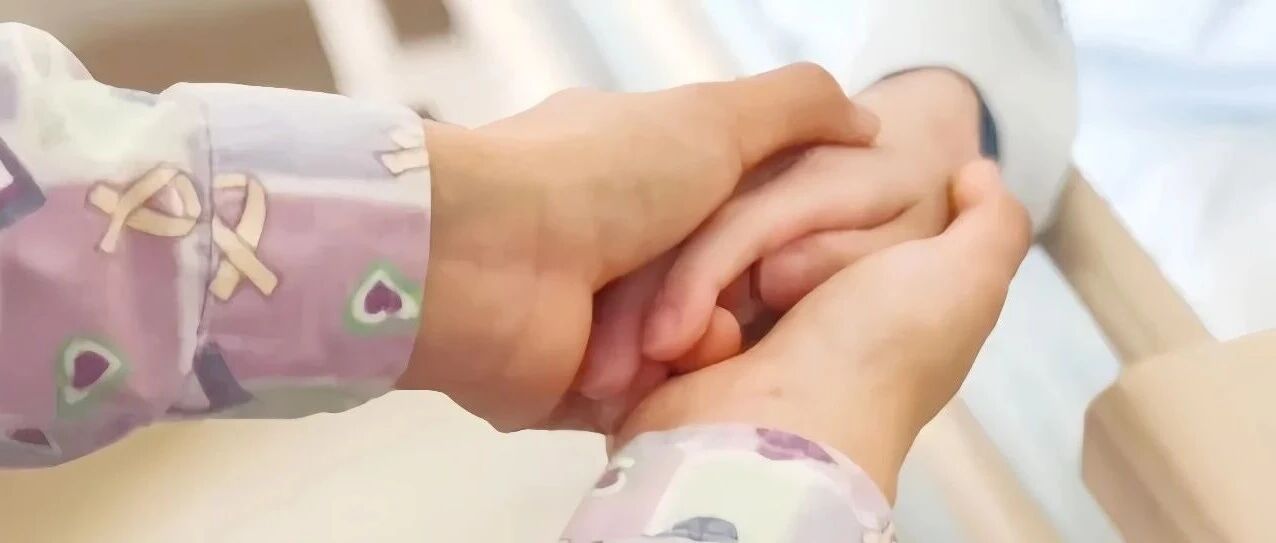
Diagnosis
Acute lymphoblastic leukaemia (ALL)
First symptom
Persistent, unexplained leg pain
Treatment
Two cycles of chemotherapy to complete remission, then allogeneic haematopoietic stem cell transplant from a fully HLA-matched sister
Time in the transplant unit
Under 20 days
Main complication
Severe intestinal GVHD with parotitis, pancreatitis and cholecystitis — over three months in hospital
Hospital
GoBroad Shanghai Zhaxin Hospital — Transplant Centre
Latest status
Three-year review completed; strength returning, back to daily life
Wenwen (a pseudonym) is a northern girl with a bright smile. She had a steady job in her home town and a quiet, ordinary life. In 2022 a storm arrived without warning. Persistent, unexplained leg pain sent her to hospital, and a diagnosis of acute lymphoblastic leukaemia split her peaceful world like a thunderclap. In that moment she was dazed — but there was little time to absorb the shock, and she was quickly started on chemotherapy.
Her parents were elderly and a younger sister still needed care, so her elder sister — three years older — took the burden of caregiving onto her slight shoulders. With her sister beside her, Wenwen travelled to GoBroad Shanghai Zhaxin Hospital for treatment, and in November of the same year received an allogeneic transplant with her sister as donor.
Wenwen remembers that it was midsummer when she left home for Shanghai; by the time she returned it was the summer of the following year. That single year felt endlessly long, and at the same time compressed into an instant.
Three years have now passed since her transplant. She recently completed her three-year review at Zhaxin Hospital and her body is slowly recovering its old vitality. She can go shopping with her friends again, ride her beloved little scooter, and think seriously about a new direction for work and for life.
At this special milestone Wenwen wanted to gently unfold her story — to share this turbulent treatment journey honestly with other patients who are still on the road, and to pass on a firm confidence and a warm strength. She also wanted to say, to the family who walked with her through the darkest hours and to her sister above all, the thanks she has buried deep and rarely spoken aloud.
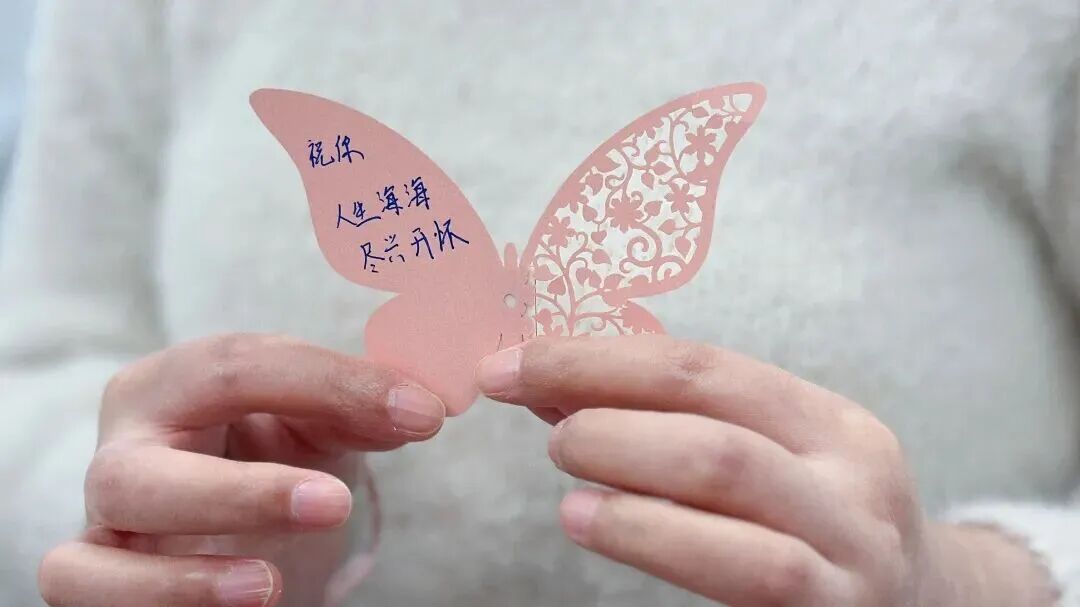
Q: What signs did your body first give you, and how were you finally diagnosed with acute lymphoblastic leukaemia?
A: My first symptom was frequent leg pain. It was hot at the time, so I assumed I had just caught a chill in a draught — I never thought of anything worse. Later I went for tests, and as soon as the results came back the doctor urgently called my sister: my blood counts were severely abnormal and I had to be admitted at once. From the day I was admitted, I never went home again.
When I was first diagnosed my family hid the truth from me, afraid I could not bear it. I only learned what I had when I happened to see the three words 'acute leukaemia' printed clearly on a report. In that instant I went blank — I simply could not believe it, and kept asking myself how this could be happening.
Before I had come round from the nightmare, chemotherapy had already begun. During that period my family ran everywhere looking for hope. Later, on the recommendation of a friend of my father's, we learned that Professor Wang Chun's team at GoBroad Shanghai Zhaxin Hospital was highly authoritative in leukaemia treatment. So after my second cycle of chemotherapy, the whole family came to Shanghai.
Q: What went into the decision to proceed to allogeneic transplant? How did you feel when you learned your sister was a fully matched donor?
A: Because it was found early and controlled promptly, I reached complete remission after two cycles of chemotherapy. But minimal residual disease was still detectable, so to clear the leukaemia cells completely and give me a chance of cure, the doctors recommended allogeneic haematopoietic stem cell transplant.
Honestly, I was terrified of transplant. On the ward I had heard other patients talk about graft-versus-host disease after transplant, especially the gut problems, and that made me especially anxious because my digestion had always been weak. But through the confusion and fear, it was the constant encouragement of my doctors and my family that held me up. The doctors told me that although allogeneic transplant is a hard road, it markedly lowers the risk of relapse — a road worth taking.
Once the decision was made, both my elder and younger sister were typed. Incredibly, my elder sister was a full match — and we are not twins, so the odds are extremely low. When the result came, she laughed and said to me, 'It seems I really am the chosen one.' But I knew that this 'chosen' luck was a gift she gave me. She is not physically strong either, yet she donated her most precious stem cells without hesitation. In that moment I understood deeply that my sister had given me a second life, and with it the courage to face the transplant.
When I hesitated, my sister was like a lamp lighting the road ahead. She never wavered in supporting the transplant, and comforted me: 'This road — I'll walk it with you.'
Q: Leaving the transplant unit marks the first key step. What was it like inside?
A: I spent under 20 days in the transplant unit before being discharged from it; the doctors and nurses all said my recovery was unusually fast. On the whole, life inside was better than I had expected. High-dose chemotherapy brought some discomfort, but apart from a tingling feeling all over while my sister's stem cells were being infused, I don't remember anything especially hard.
I did develop diarrhoea and could not settle day or night. Director Liu Huixia came to see me every single day to encourage me, telling me the cells were growing well and I would soon be out. That professional care and warm company gave me enormous confidence and strength.
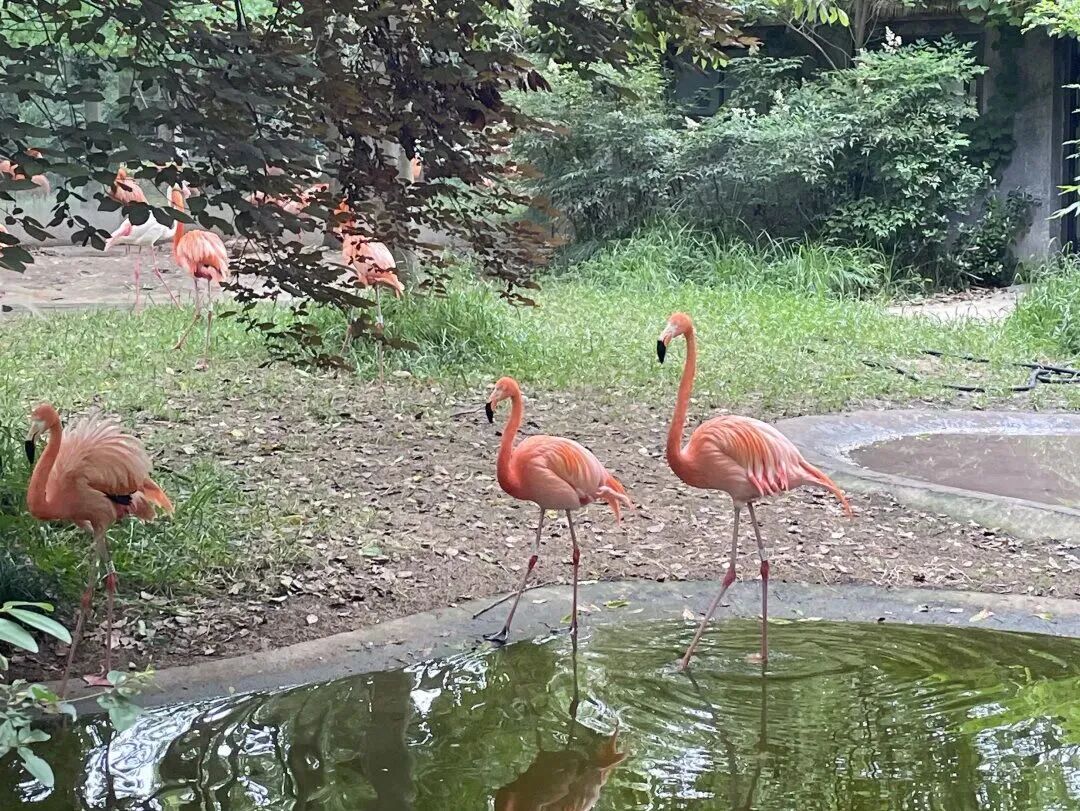
After leaving the unit I convalesced near the hospital for several months. As my strength came back, one day I went with my family to Shanghai Wild Animal Park. The sun was beautiful, and from somewhere I found the energy to walk around happily all day. Watching those animals running free and full of life, it dawned on me that I too was stepping out of the prison of illness, back into this vivid world.
Q: After leaving the unit, did you develop graft-versus-host disease, and how did you get through it?
A: The real challenge came more than six months after I left the unit. I suspect a small piece of under-ripe watermelon triggered severe intestinal graft-versus-host disease. Looking back, the watermelon was only the fuse — the underlying reason was my already fragile gut.
I remember clearly that the intestinal GVHD kept me in hospital for over three months. During that time I could not eat at all and lived on intravenous nutrition for two and a half months. At the worst point several inflammations came at once: the gut GVHD had not healed, then I got parotitis and my face swelled badly — at night the pain had me sitting up crying quietly — along with pancreatitis and cholecystitis. The double torment of body and mind made me want to give up; I even phoned my father and said I would stop treatment.
But my family's love kept me going. On the phone my father said firmly, 'You must be treated.' My sister stayed with me 24 hours a day; seeing the pain of the parotitis, she found aloe juice to compress my face and ease it. It was their unreserved giving that made me feel I could not fail such heavy love — having paid so great a price to win this life back, I had to keep going.
Looking back now on that darkest time, I feel deeply that it was my family's love and their round-the-clock watch that gave me the courage to defeat GVHD and walk out of the dark; and it was the medical team's expert treatment and meticulous care that carried me through one crisis after another.
Q: Looking back over these three years, who do you most want to thank?
A: Through all those years of fighting the illness, the person I most want to thank is my sister.
This illness changed the course of her life too. Before I fell ill she had a steady job and a boyfriend she was planning to marry. But to care for me wholeheartedly she took leave again and again, finally resigning and putting her whole life at my centre — and losing that relationship because of it.
From chemotherapy to transplant, from severe GVHD to final discharge, my sister was always beside me, renting a flat near the hospital and never leaving day or night. When I was in most pain and my mood was worst, I often said discouraging things, even hurtful things — yet she absorbed my bad temper without wavering once.
She is independent and strong, and has been my model since childhood. She sacrificed her career and her love to buy me the chance of rebirth — without her I could not be sitting here today. I have carried this debt deep inside and rarely said it out loud.
I also want to thank my parents. They are old now, yet they travelled a thousand miles to Shanghai again and again, quietly holding me up. I am not good at expressing myself, but in my heart I always wish them health, safety and happiness.
These unspoken thanks I want to say properly today: thank you, for walking the darkest road of my life with me, with selfless love.
Q: Has this experience changed how you see life?
A: This illness changed me without my noticing. I used to be introverted and quiet; after falling ill I met so many more people — medical staff, other patients — and my personality gradually opened up. Now I am sometimes funny, sometimes a bit wild, as if I am living a different way.
It is not only my character that changed, but my mindset. Since leaving the unit I have been fighting chronic skin GVHD; there is a large patch of pigmentation on my neck, as if it were not washed clean. At first I minded terribly and wrapped myself up tightly whenever I went out. Once on a high-speed train a passenger behind kept staring at my neck, and when my mother told me, it hurt.
But at some point I gradually accepted myself as I am. From wrapping up tightly to calmly showing my neck, I told myself: let people look if they want. It is not my fault. I was simply ill — not unclean, and certainly nothing to be ashamed of.
What was truly hard for me was other people's looks and words. Relatives would ask, 'How did you get this illness?' Neighbours who saw the marks on my neck would come over and press me about it. At first I was very sensitive and did not even want to go out. Later I learned how to handle it — I don't raise it myself, and if asked I answer briefly. I am no longer afraid of strange looks, nor tangled up over an illness I cannot explain.
From avoidance to acceptance, from breaking down to answering lightly — I finally learned to give other people's ignorance back to them, and to give my calm self back to myself.
Looking ahead, I have started to think about and try the work I am capable of, and to reconnect with the world. Today I have learned to make peace with myself — no inner grinding, no anxiety, treating everything as a brand-new start. I firmly believe every road has its own scenery, and even walking a little slower, I will arrive at my own distant place.
The specialist's view
Director Zhao Chuxian: Listening to Wenwen brings me back to those days when 'GVHD and infection took turns' — intestinal GVHD, gastrointestinal bleeding, parotitis, cholecystitis, pancreatitis, viral infection. After transplant the immune system is like a city wall that is not yet finished: any gust of wind puts us on alert. Every barrier Wenwen gritted her teeth through, and her sister's constant watch, are still vivid to me. I still remember that pot of tenacious cactus — the truest footnote to the bond between the two sisters.
As important as the treatment inside the unit is the 'long march' afterwards — regular follow-up, precise medication adjustment, daily care and rebuilding nutrition. Every link is decisive. Only in this way can a hard-won rebirth be protected. May every 'fighter' who walks out of the transplant unit, guarded by both family and medical team, come through the storms into their own clear skies.
Treatment timeline
- Summer 2022Persistent leg pain leads to blood tests showing severely abnormal counts; Wenwen is admitted immediately and diagnosed with acute lymphoblastic leukaemia.
- 2022Chemotherapy begins. After the second cycle the family travels to GoBroad Shanghai Zhaxin Hospital, drawn by Professor Wang Chun's leukaemia team.
- 2022Complete remission achieved after two cycles, but minimal residual disease remains detectable. Allogeneic transplant is recommended; her elder sister is confirmed as a fully HLA-matched donor.
- November 2022Allogeneic haematopoietic stem cell transplant with her sister as donor. She leaves the transplant unit in under 20 days.
- May 2023Five months post-transplant, strength returning — a full day out at Shanghai Wild Animal Park with her family.
- Mid-2023Severe intestinal GVHD with parotitis, pancreatitis and cholecystitis; over three months in hospital, two and a half of them on intravenous nutrition.
- October 2023Having beaten the intestinal GVHD, she leaves Shanghai and returns home.
- Late 2025 – early 2026Three-year review completed at Zhaxin Hospital. Chronic skin GVHD is managed, strength continues to return, and she is planning work and a new chapter of life.
About the specialist
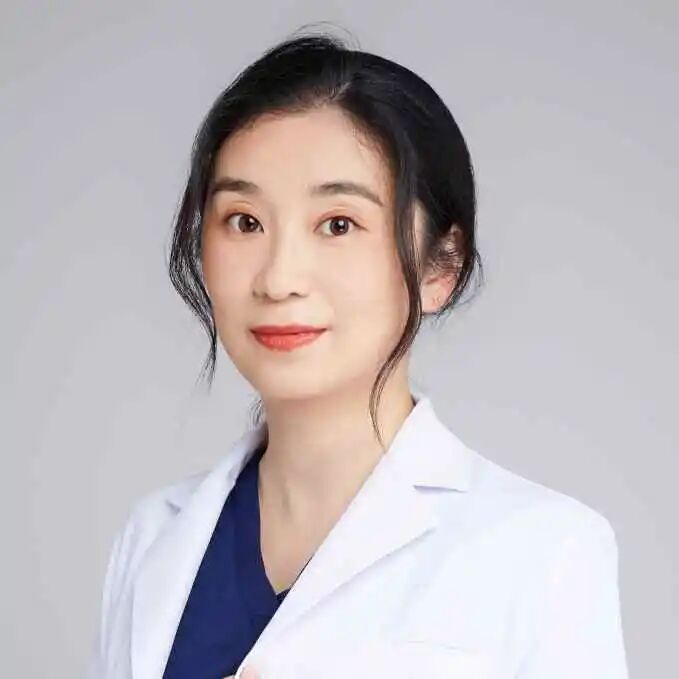
Dr Zhao Chuxian — Associate Chief Physician, MD
- · Director, Transplant Centre, GoBroad Shanghai Zhaxin Hospital
- · Member of the Leukaemia Collaborative Group, Haematology Branch, Shanghai Medical Association
- · Formerly attending physician in Haematology at Shanghai General Hospital, with nearly 20 years of experience in the diagnosis and treatment of haematological disease
- · Published repeatedly in the National Medical Journal of China and the Chinese Journal of Hematology; participated in a Shanghai Science and Technology Commission major project on refined diagnosis, classification and standardised treatment of acute leukaemia
- · Specialises in acute and chronic leukaemia, aplastic anaemia and other blood disorders, and in the management of patients after haematopoietic stem cell transplant
Source: GoBroad Shanghai Zhaxin Hospital / GoBroad Medical Forum