Allogeneic Transplant · Adult Acute Lymphoblastic Leukaemia · 15 January 2026
Patient Voices | Five years in complete remission — one adult ALL patient's recovery after a stem cell transplant
Diagnosis
Acute lymphoblastic leukaemia (ALL), diagnosed end of 2019, aged 55
First symptom
Persistent fatigue and weakness
Major complication
Influenza infection during post-chemotherapy neutropenia leading to severe pneumonia; wheelchair-bound on admission to Zhaxin Hospital
Treatment
Complete remission after induction chemotherapy with MRD-negative consolidation, then a fully HLA-matched allogeneic transplant from his sister (June 2020)
Time in the transplant unit
About one month; worst toxicity was severe oral mucositis at zero white cell count
Outcome
No severe graft-versus-host disease; five years of continuous complete remission and a formal five-year "graduation" in 2025
Hospital
GoBroad Shanghai Zhaxin Hospital
Mr Li, now 60, will never forget the moment at the end of 2019 when he was told he had acute lymphoblastic leukaemia. The sudden turn of fate did not break him. With his family beside him he searched from hospital to hospital, and finally found the turning point of his life at GoBroad Shanghai Zhaxin Hospital. In June 2020 he successfully received a fully matched allogeneic haematopoietic stem cell transplant — the "seed of life" came from his younger sister.
A successful transplant is only the beginning of a long road. Through the critical first year afterwards he turned self-discipline into a shield, applying home recovery to every last detail — from diet and daily routine to activity, infection control came first. He came through that fragile, sensitive period safely.
Five years is a milestone of clinical cure in medical terms, and an important witness to one person's rebirth from illness. In 2025, with his family and the medical team present, GoBroad Shanghai Zhaxin Hospital held a warm "graduation ceremony" for Mr Li and awarded him a commemorative badge symbolising recovery and courage.
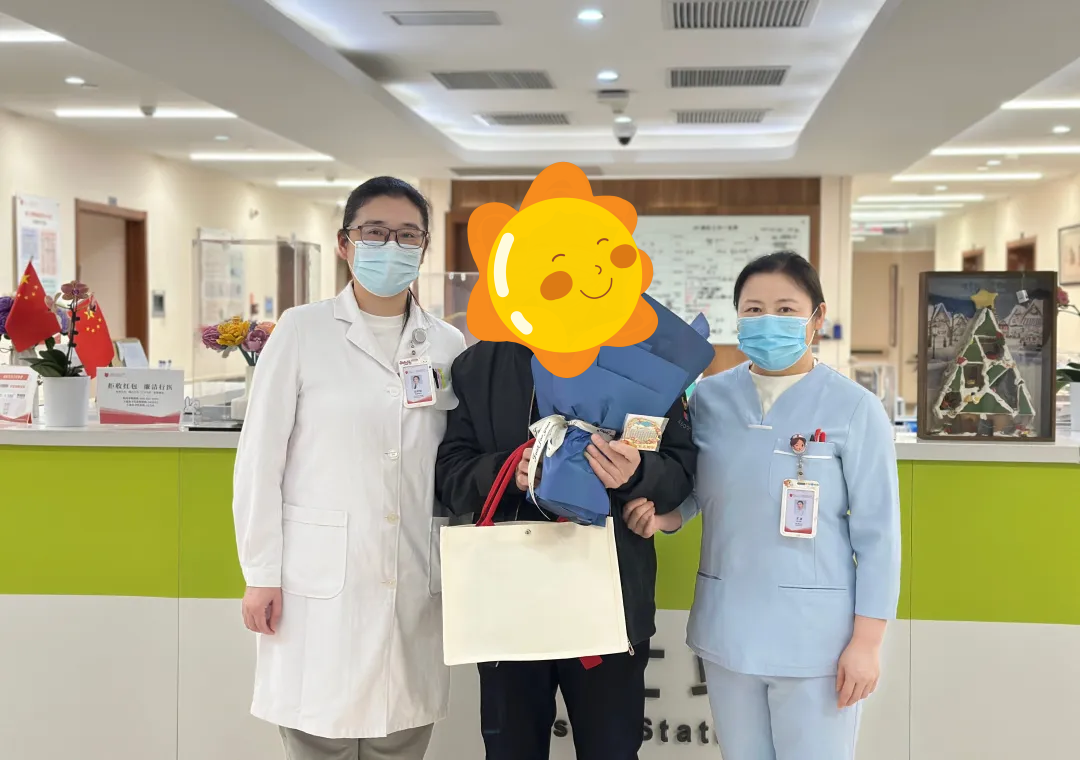
Standing at this moment lit by love and hope, Mr Li said with feeling: "I have actually recovered very well, but I still chose to complete this five-year review at Zhaxin Hospital. It is not only a full stop to my past treatment and struggle, it is also a brand-new departure." Never one for many words, he was willing to take this opportunity to share his treatment experience and his inner journey, in the hope of offering real hope and a real reference to patients still fighting.
Q: What did you feel when you were first diagnosed with acute lymphoblastic leukaemia?
A: At the end of 2019 I went to my local hospital because of persistent fatigue, and never expected to be diagnosed with acute lymphoblastic leukaemia. The news broke the calm of our family like a boulder. We did not dare waste a moment and set off for Shanghai for treatment.
At the hospital in Shanghai I completed my first cycle of chemotherapy smoothly. Afterwards I went home to rest — this should have been the key period for recovery, but I unfortunately caught the influenza virus. My immunity was extremely low at the time and it triggered a dangerous lung infection. My condition deteriorated sharply; I ran a persistent high fever and was rushed back to Shanghai overnight by ambulance.
Just as the whole family was at its wits' end, on the recommendation of another patient we made our way to Zhaxin Hospital.
By the time I was admitted I was too weak to walk and had to be pushed in a wheelchair by my family. The lung infection made every breath extraordinarily difficult, as if life were being swallowed bit by bit. Fortunately the medical team at Zhaxin was professional and decisive, and drew up a precise anti-infection plan for me. Under their all-out treatment and meticulous nursing I passed through that gate of death and defeated the dangerous infection.
Encouragingly, my body responded well to chemotherapy. The first induction cycle achieved complete remission; I then completed consolidation chemotherapy according to the plan my doctors set, and review showed minimal residual disease was negative. That was undoubtedly heartening news.
To seize that precious window, achieve a thorough cure and minimise the risk of relapse, Professor Wang Chun's medical team recommended an allogeneic haematopoietic stem cell transplant. When the word "transplant" was placed in front of me, I knew this was the most critical step towards a new life — and the one that took the most courage.
The news mobilised the whole family again. My brothers and sisters came from all directions without hesitation, only to bring me a chance of life. After HLA typing, fortune smiled on me once more — my younger sister was a full match. Without a moment's hesitation she donated the precious "seed of life" to me.
From an unexpected diagnosis to being pulled back from the brink, from an infection crisis to the dawn of transplant — the road was hard and winding, yet it also brought countless moments of gratitude and kindness.
Q: Which moment in the whole treatment was the hardest to bear?
A: That month in the transplant unit was the longest and hardest time of my life.
The hardest part was the period when my white cell count fell to zero. There was almost no immunity left in my body; I was utterly fragile, and it truly was the most dangerous gate. Huge treatment reactions came with it — for me the worst was oral ulceration; my whole mouth broke down, and the pain was unbearable, so that even drinking water became torment. Fortunately the treatment and care from the hospital's staff were highly professional and timely, and those severe ulcers slowly improved.
At that time extreme physical discomfort and psychological panic were tangled together. My family could not be at my side and I felt terribly anxious and uneasy. The only comfort was being able to phone them, or see them through the window glass. They kept cheering me on from outside, telling me "you must hold on". I knew there was no way back for me; I could only grit my teeth and get through it.
You could say that getting through this gate relied not only on medical technology, but also on that encouragement from my family and the inner conviction that "I must live".
The moment I finally heard the doctor say I could leave the unit, it truly felt like a new life! I knew there might still be challenges such as graft-versus-host disease ahead, but leaving the unit meant the biggest hurdle had been cleared, and hope had genuinely arrived. I had the confidence and courage to walk the rest of the road step by step.
Q: Self-management at home after a stem cell transplant is vital. What experience would you most like to pass on?
A: After leaving the unit I stayed in hospital for over a month, rented a flat nearby and lived there for almost half a year after discharge. Only after several return visits for review and blood tests, when the assessments were all stable, did I finally feel safe enough to go home.
Looking back over the whole recovery, I count myself fairly lucky. The most difficult stage was inside the unit, especially the zero white cell count and the severe oral ulcers. After leaving the unit I did not develop any very dangerous graft-versus-host reaction, and recovery went relatively smoothly.
Behind that "smoothness" was extremely careful self-management. I know infection is the primary threat facing a patient with a blood disorder, so I paid attention to every detail of daily life and never allowed myself to relax.
Diet: I kept to a bland, easily digestible diet for a long time, mainly congee and noodles. I was extremely careful about everything that went into my mouth and strictly controlled what I could and could not eat. In particular, during the first year after transplant all fruit was heated (boiled or briefly microwaved) before eating, and I absolutely never touched raw or cold food.
Hygiene: Personal hygiene and disinfection at home were the top priority. I insisted on disinfecting tableware and household items, and kept that habit for at least six months or more — even when I felt better, I never let my guard down.
Activity: I avoided any crowded public place as far as possible, and largely limited my activity to walks inside my own residential compound, minimising every possible risk of infection.
I believe that defeating this disease needs not only the hospital's excellent medical skill; long-term, meticulous self-management after discharge matters just as much. It takes firm determination, and above all it takes weaving that caution into every small detail of daily life.
Q: Looking back, what would you like to share, and what would you say to patients still fighting?
A: Having come this far, I can finally say that I have "graduated" from hospital. Looking back on more than five years of fighting leukaemia, all my emotions finally turn into deep gratitude.
First, I must thank my family solemnly. I will never forget this kindness. Thank you to my younger sister, who gave me the seed of life; thank you to my wife and my elder sister, who took turns caring for me in Shanghai when I was at my most fragile, and got through the hardest days with me; thank you to our whole extended family — your support, encouragement and refusal to give up were my firmest backing. When the side effects of treatment left me unable to get out of bed for a month, when my weight plunged by more than twenty kilos and my mood was at its lowest, it was my family's encouragement, again and again — "science is so advanced now, this can definitely be cured" — that pulled me back from the edge of despair. I hold all of this in my heart.
At the same time I want to thank the whole medical and nursing team at GoBroad Shanghai Zhaxin Hospital from the bottom of my heart. It was your superb skill and careful nursing that pulled me out of danger time after time — whether the dangerous lung infection or the many hurdles inside the transplant unit. This is the place where I was reborn.
This experience also gave me some deep insights into how to fight disease. I would like to share three pieces of advice with patients still struggling.
First, belief is the foundation — never give up. I know how dangerous this disease is, and I have felt despair. But please believe that modern medicine keeps advancing; as long as we do not give up on ourselves, there is always hope. Carve the belief "I will get better" into your heart.
Second, attitude is medicine and family is your support. Feeling low or wanting to lose your temper is normal; do not blame yourself too much. At such times a family's company, listening and encouragement are vital. For families: please have more patience and understanding — your care is a "wonder drug" no medicine can replace.
Third, details decide the outcome and self-discipline wins the future. Self-management after discharge is as important as treatment in hospital. Especially with food hygiene and personal protection, you cannot be careless. Self-discipline is an important line of defence protecting our fragile immune system.
Today I enjoy a comfortable retirement, do a little handicraft work to supplement the household income, and can look after my elderly mother. Regaining my health has made me treasure ordinary days with my family all the more. Finally, I want to say to all patients and families: this road is hard, but please summon your confidence and hold on to hope. Scientific treatment, the love of family and personal perseverance will in the end carry us through the storm to a new life.
Specialist commentary
Dr Zhao Chuxian: Allogeneic haematopoietic stem cell transplant is a reliable path to cure for adult acute lymphoblastic leukaemia. Infection control and whole-course management before and after transplant — not one step can be allowed to slip. Mr Li has handed in a high-scoring answer paper over five years, and has also left us his practical tips on daily care and self-management, ready to copy and use.
Every time we award a "five-year graduation" badge, we are genuinely moved. Looking at Mr Li's smiling face, even winter feels warm. We look forward to the next "graduation season" at Zhaxin Hospital.
Treatment timeline
- End of 2019Persistent fatigue leads to tests at his local hospital and a diagnosis of acute lymphoblastic leukaemia; the family sets off for Shanghai immediately.
- Early 2020After the first chemotherapy cycle he catches influenza at home and develops severe pneumonia; rushed back to Shanghai by ambulance and transferred to GoBroad Shanghai Zhaxin Hospital, arriving in a wheelchair.
- 2020A precise anti-infection plan clears the pneumonia. Induction chemotherapy achieves complete remission; consolidation follows and minimal residual disease is negative.
- June 2020Fully HLA-matched allogeneic haematopoietic stem cell transplant with his younger sister as donor; about one month in the transplant unit, with severe oral mucositis at nadir.
- Second half of 2020Over a month in hospital after leaving the unit, then nearly six months in rented accommodation near the hospital with repeated reviews; no severe graft-versus-host disease.
- 2020 – 2021Strict home self-management: bland cooked diet with all fruit heated, disinfection of utensils for over six months, and avoidance of crowded places.
- 2025Five years of continuous complete remission. GoBroad Shanghai Zhaxin Hospital holds a "graduation ceremony" with his family and awards a commemorative badge.
- TodayEnjoying retirement, doing handicraft work to supplement the family income and caring for his elderly mother.
About the specialist
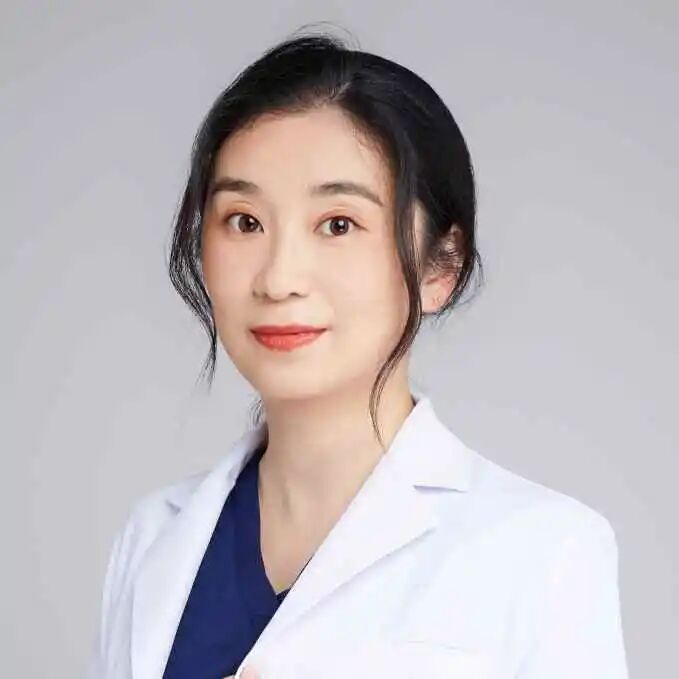
Dr Zhao Chuxian — Associate Chief Physician, MD
- · Director, Transplant Centre, GoBroad Shanghai Zhaxin Hospital
- · Member of the Leukaemia Collaborative Group, Haematology Branch, Shanghai Medical Association
- · Formerly attending physician in Haematology at Shanghai General Hospital, with nearly 20 years of experience in the diagnosis and treatment of haematological disease
- · Published repeatedly in the National Medical Journal of China and the Chinese Journal of Hematology; participated in a Shanghai Science and Technology Commission major project on refined diagnosis, classification and standardised treatment of acute leukaemia
- · Specialises in acute and chronic leukaemia, aplastic anaemia and other blood disorders, and in the management of patients after haematopoietic stem cell transplant
Source: GoBroad Shanghai Zhaxin Hospital / GoBroad Medical Forum