Severe Aplastic Anaemia · Allogeneic Stem Cell Transplant · Long-term Follow-up · 20 October 2026
Severe Aplastic Anaemia Treatment in China: Three Patients Share Life Five Years After Stem Cell Transplant
Condition
Severe aplastic anaemia (SAA), a bone marrow failure disorder
Hospital
GoBroad Shanghai Zhaxin Hospital
Treatment
Allogeneic haematopoietic stem cell transplantation; family donors in all three stories
Long-term care
Five-year follow-up milestones, infection and graft-versus-host disease management, and rehabilitation; individual outcomes vary
Partner story: Five Years After Transplant for Aplastic Anaemia—What They Want to Tell Others Still in Treatment
For patients with blood diseases and cancer, every step is hard-won: from confusion and anxiety at diagnosis, through treatment and gradual recovery, to returning to work and everyday life. In 2026, three patients who had received allogeneic haematopoietic stem cell transplants at GoBroad Shanghai Zhaxin Hospital reached important five-year post-transplant milestones. In this edition of Patient Stories, we hear about their five-year journeys of recovery and the experiences they want to share with others still receiving treatment.
Mr Liu (pseudonym) · Severe Aplastic Anaemia
“Having the whole family together, safe and healthy, matters more than anything.”
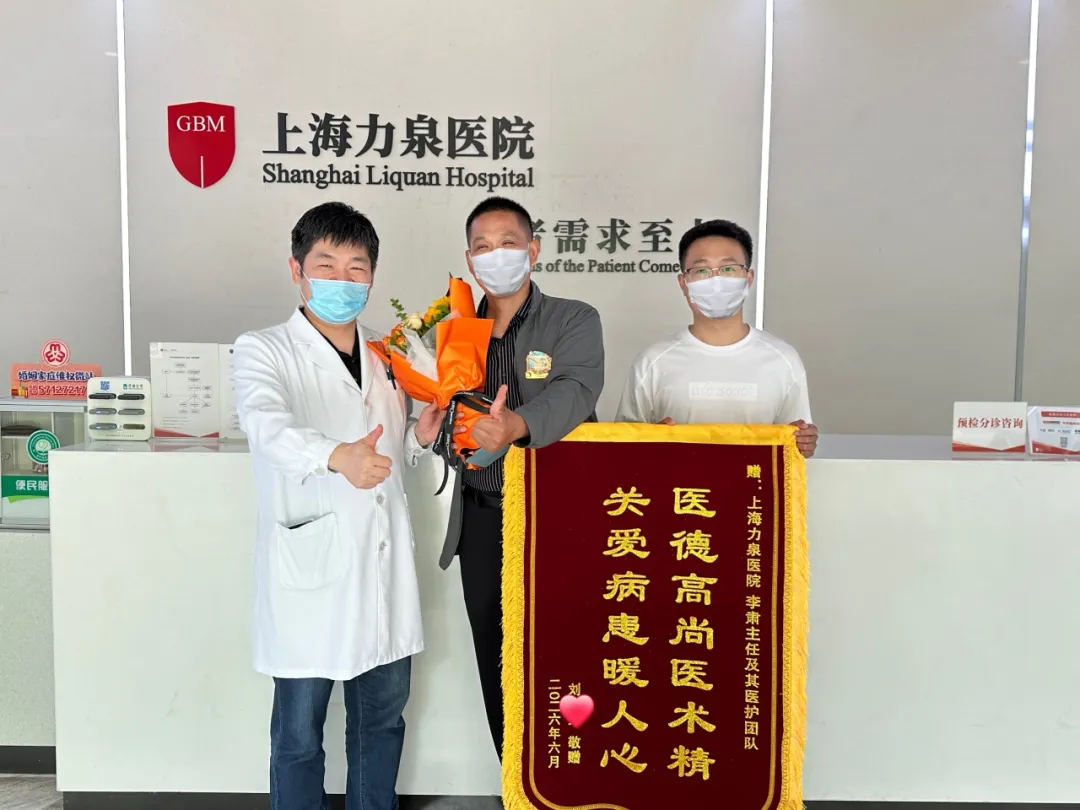
In September 2020, Mr Liu, who had always been physically strong, had abnormal results on a routine blood test before a physiotherapy session and was subsequently diagnosed with severe aplastic anaemia (SAA). He initially chose conservative treatment, but the disease progressed much faster than expected. The interval between blood transfusions shortened from ten days to three. Frequent gum bleeding and severe fatigue made even everyday activities difficult for this teacher who had spent decades in education.
As his health continued to deteriorate, Mr Liu temporarily lost confidence in treatment. His family's persistence and the first-hand experiences shared by several fellow patients restored his hope and gradually eased his fear of stem cell transplantation. In June 2021, he came to GoBroad Shanghai Zhaxin Hospital for an allogeneic haematopoietic stem cell transplant with his son as donor.
Treatment in the transplant isolation unit was generally stable. After leaving it, however, he experienced complications including intestinal infection, followed by viral infection and graft-versus-host disease during recovery. With ongoing treatment from Dr Li Su, Dr Liu Huixia and the medical team, the complications gradually came under control and his condition improved. About one year after transplant, he returned to school and the classroom he had missed so much. This year he returned to the hospital for his important five-year post-transplant review and successfully completed all examinations.
The illness changed his understanding of life: ‘As long as the family can all be together, safe and healthy, that matters more than anything.’ Having once hesitated over treatment himself, he hopes to remind others to seek timely, professional care from established medical providers. After a thorough assessment of their disease and physical condition, patients should work with their doctors to identify the right treatment timing rather than allow fear and hesitation to delay necessary care.
Read the full original story: ‘Five Years in CR · Graduating from Hospital | From Classroom to Ward: Life Has Its Twists and Turns’ — https://mp.weixin.qq.com/s?__biz=MzU1MTE2MDI0MQ==&mid=2247514868&idx=1&sn=a9b5398990a195adc1b5c39b4f164a9a&scene=21#wechat_redirect
Xiao Jie · Severe Aplastic Anaemia
“Illness is just an interlude in life. Since it did not defeat me, it will only make me stronger.”
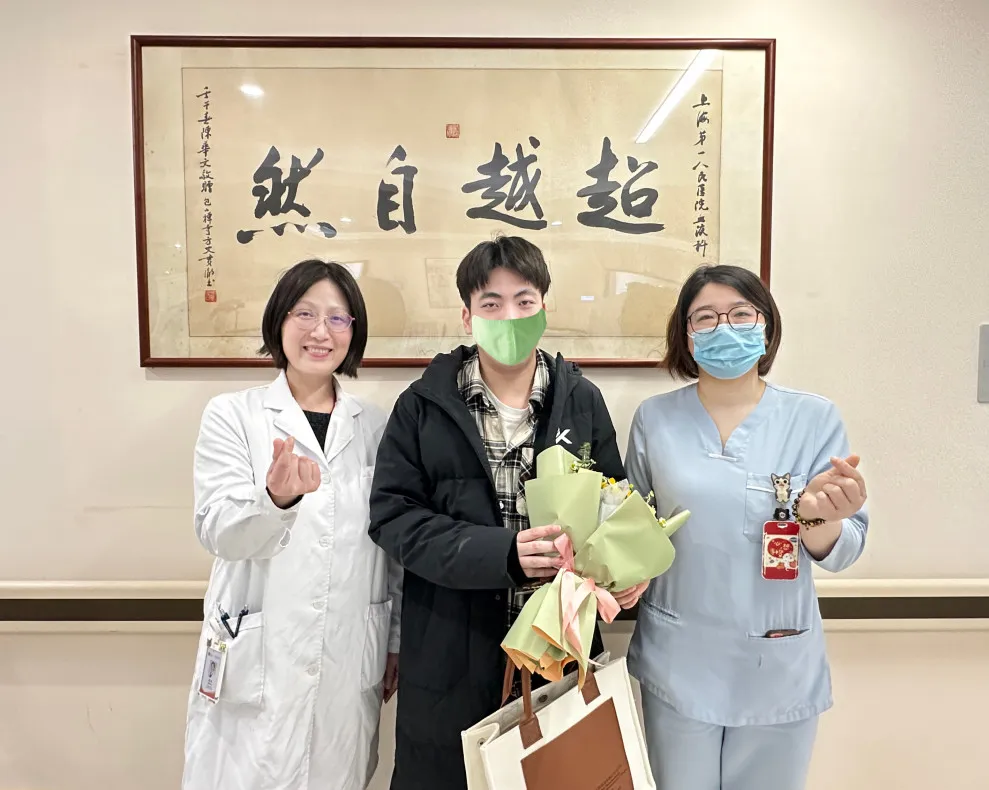
In January 2021, 16-year-old Xiao Jie developed repeated gum bleeding, then sought emergency care for sudden severe abdominal pain. He was ultimately diagnosed with severe aplastic anaemia (SAA). In February that year, he received an allogeneic haematopoietic stem cell transplant at GoBroad Shanghai Zhaxin Hospital with his father as donor. Under Dr Jiang Ying and her team, he completed the transplant successfully and gradually recovered blood-cell production. However, immune-related pain and skin graft-versus-host reactions caused considerable suffering. His symptoms gradually eased only after medication adjustments and continued treatment.
About two years after transplant, following medical assessment, Xiao Jie finally returned to high school. Although he was two years behind his peers, he worked hard to complete his studies, gained admission to his preferred university and enjoyed university life.
In 2026, Xiao Jie reached the important five-year post-transplant milestone and successfully completed his review. Looking back, he remains grateful for his family's sacrifices and the support of the medical staff, and appreciates health more deeply. He said: ‘Illness is just an interlude in life. Since it did not defeat me, it will only make me stronger.’
Read the full original story: ‘Five Years in CR · Graduating from Hospital | The Time “Stolen” at Age 16’ — https://mp.weixin.qq.com/s?__biz=MzU1MTE2MDI0MQ==&mid=2247511394&idx=1&sn=42a8d60fe69b6dadee9dedf0e1381023&scene=21#wechat_redirect
Xiao Ling (pseudonym) · Severe Aplastic Anaemia
“The person I might have been without illness would not necessarily be stronger than the person standing here today.”
In October 2019, 19-year-old Xiao Ling had just started university when recurrent purpura and pinpoint bleeding spots, together with worsening tiredness and weakness, prompted her to seek care. She was diagnosed with severe aplastic anaemia. Conservative treatment did not adequately improve her blood counts. After consulting several providers and undergoing comprehensive assessment, she received a related haploidentical haematopoietic stem cell transplant at GoBroad Shanghai Zhaxin Hospital in 2020, with her father as donor. Her underlying disease achieved complete remission.
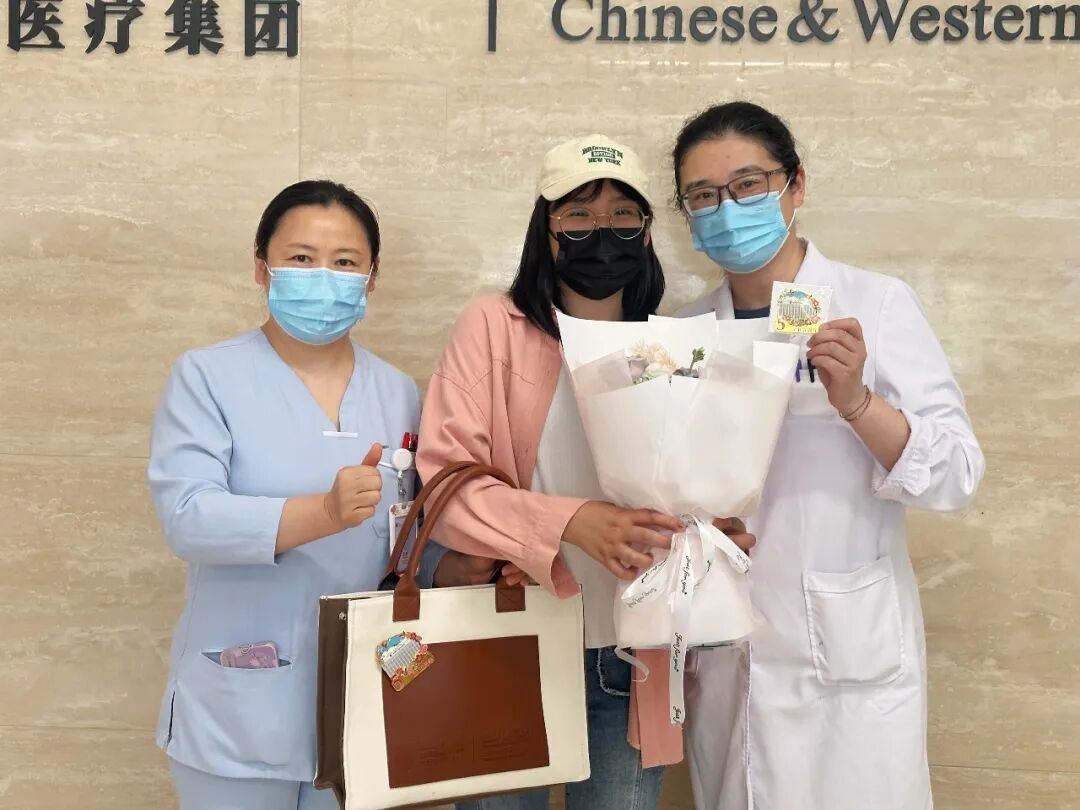
A successful transplant did not make recovery straightforward. Xiao Ling subsequently developed chronic graft-versus-host disease. Lung involvement caused breathlessness and fatigue on activity; stiffness in the tendons and joints of her hands interfered with normal movement; and skin involvement changed her appearance. Facing both physical and psychological challenges, she followed prescribed medication, regular reviews and rehabilitation training with support from Dr Zhao Chuxian and the medical team. Her symptoms gradually improved. In the years after transplant, she returned to university, completed her degree and obtained a job she wanted. Although she still needs ongoing care and rehabilitation management, she has gradually regained the rhythm of her life.
This year, Xiao Ling returned to the hospital for a special ‘graduation ceremony’ and received the first bouquet of flowers of her life. After the trials of illness and recovery, she values the present more and hopes her story can encourage patients still in treatment to face their difficulties bravely. She once wondered whether she would have had a different life without illness. Now her answer is firmer: ‘The person I might have been without illness would not necessarily be stronger than the person standing here today.’
Read the full original story: ‘Five Years in CR · Graduating from Hospital | “Without Illness, I Might Not Have Been Stronger Than I Am Today”’ — https://mp.weixin.qq.com/s?__biz=MzU1MTE2MDI0MQ==&mid=2247514785&idx=1&sn=61c454815b9e96eb8868708836ac3b16&scene=21#wechat_redirect
Aplastic anaemia is a disorder in which the bone marrow's blood-cell production fails. Allogeneic haematopoietic stem cell transplantation is an important treatment for achieving long-term disease control in some patients. After transplant, appropriate complication management, long-term follow-up and rehabilitation support also affect quality of life and long-term prognosis.
Their stories reflect the real treatment and recovery journeys of many patients with aplastic anaemia. Although disease severity, treatment choices and recovery differ between individuals, these experiences spanning more than five years show the possibility of long-term disease control and a gradual return to everyday life. May every patient working towards recovery, supported by professional care, family and continued compassion, move step by step beyond illness and embrace their own life again.
Original content compilation: Yoyo.
Privilege Medical Guidance: Aplastic Anaemia Treatment in China
The following information is added by Privilege Medical, separate from the original partner story. These are individual patient experiences, not a guarantee of cure or evidence of outcomes for overseas patients.
What is severe aplastic anaemia, and what does this case show about stem cell transplantation?
Severe aplastic anaemia (also spelled severe aplastic anemia, or SAA) involves failure of the bone marrow to produce enough blood cells. The source describes allogeneic haematopoietic stem cell transplantation (HSCT) using family donors, including a related haploidentical transplant for Xiao Ling. It also documents infection, graft-versus-host disease (GVHD), rehabilitation and long-term follow-up. A transplant decision requires specialist review of the exact diagnosis, blood counts, prior treatment, donor options and overall health; these stories are not a treatment prescription.
Can a friend or relative request a free assessment for aplastic anaemia treatment in China?
Yes. If you, a friend or a relative has aplastic anaemia or bone marrow failure and would like to explore care in China, contact Privilege Medical for a free consultation. With the patient's permission, upload diagnosis and bone marrow reports, recent blood tests, treatment and transfusion history, and available medical or imaging reports through our Free Assessment form. We connect families with hospital specialists for assessment and coordinate communication throughout treatment. Our consultation and coordination service is free for patients; hospital treatment, medicines, travel and accommodation are not included free of charge. Eligibility, donor suitability and treatment availability must be confirmed by the hospital. Do not delay urgent local care while awaiting an assessment.
Treatment timeline
- 2019–2020 · Xiao LingDiagnosed in October 2019; received a father-donor haploidentical transplant in 2020, followed by complete remission and chronic GVHD care.
- Jan–Feb 2021 · Xiao JieDiagnosed at age 16 in January; received an allogeneic transplant from his father in February.
- Sep 2020–Jun 2021 · Mr LiuDiagnosed in September 2020; received an allogeneic transplant from his son in June 2021.
- Recovery and returnMr Liu returned to teaching about one year after transplant; Xiao Jie returned to high school after about two years; Xiao Ling completed university and found work while continuing rehabilitation.
- 2026 · Follow-upThe partner article reports five-year post-transplant milestones and continued attention to long-term recovery.