Targeted Therapy · Advanced Gastric Cancer · 19 August 2025
Patient Voices | After multiple lines of therapy failed in advanced gastric cancer, she improved on CLDN18.2-targeted treatment

Diagnosis
Poorly differentiated gastric adenocarcinoma with distant metastasis (diffuse infiltrative type, "linitis plastica"), advanced stage
Age at diagnosis
40 years old
Biomarkers
HER2-negative, CLDN18.2-positive on immunohistochemistry
Prior treatment
Total gastrectomy (Jan 2022), lymph node dissection, chemotherapy plus immunotherapy — stopped after immune-related pneumonitis ("white lung")
Condition before treatment
Intestinal obstruction, peritoneal metastasis, ureteric stricture and hydronephrosis; bilirubin up to 300 μmol/L; body weight just over 30 kg; wheelchair-bound with a nasal feeding tube
Treatment
Individualised CLDN18.2-targeted therapy started February 2025, with treatment intensity and rhythm adjusted dynamically to tolerance
Response
Bowel function recovered within about a week; lesions shrank and obstruction eased; semi-solid food resumed after the second cycle in March 2025
Hospital
Shanghai GoBroad Cancer Hospital, affiliated to China Pharmaceutical University
From the day she was diagnosed with advanced gastric cancer at the age of 40, Chen Li's tug-of-war with the disease had already lasted four years.
Surgery, chemotherapy, immunotherapy, repeated admissions, hospital transfers, treatment suspensions, and the endless search for another chance — looking back, her husband Zhang Kaiming said those four years were like a winter so long that they could barely walk out of it.
Then, in 2025, things finally began to turn.
December 2025, a Shanghai winter morning with a hint of warmth. Chen Li sat at a table in the rest area, a plate of small pan-fried buns in front of her — four liang, six of them, bases fried golden. She dipped one in vinegar and took a bite; the crisp shell cracked softly.
She ate very slowly, as if completing a sacred ritual with total concentration.
Prof. Zhou Jun — Medical Vice President of Shanghai GoBroad Cancer Hospital, affiliated to China Pharmaceutical University, and Director of its Gastrointestinal Oncology Department — passed by on his ward round, watched from a distance, and only left after she had finished four of the buns.
It was hard to imagine that a year earlier, when the two first met, Chen Li had looked entirely different.
"In 30 years of practice I have rarely seen a gastric cancer patient this thin," Prof. Zhou recalled. "She had almost no mobility left; her husband pushed her into the clinic in a wheelchair. She was emaciated beyond recognition — sunken eye sockets, protruding cheekbones, a nasal tube in place. My judgement at the time was that the situation was very unfavourable."
No one expected that this patient, once thought to have only months to live, would one day sit at a table again and slowly finish a warm breakfast.
The disease came too fast
At 8 a.m. on 18 January 2022, Chen Li was wheeled into the operating theatre. At first, everyone assumed it would be a "minor operation".
Chen Li had a long history of stomach pain. She and her husband had run a business together for more than a decade and were always busy. Had the pain not clearly worsened during that period, she might never have had that gastroscopy.
The gastroscopy found a small defect in the stomach wall. The doctors suspected an early tumour and advised surgery as soon as possible.
But hours into the operation, the picture changed. Intraoperative pathology showed that after partial resection the margins were still positive, with tumour cells visible: the true extent of invasion and the malignancy far exceeded pre-operative expectations, and a total gastrectomy became unavoidable. Post-operative pathology reported poorly differentiated gastric adenocarcinoma with distant metastasis — advanced gastric cancer.
Afterwards, the doctor explained it to the couple with a vivid metaphor: "What the gastroscope saw was only the crater. Underneath, it was already all lava."
Chen Li had a relatively rare subtype of gastric cancer — "linitis plastica" (diffuse infiltrative gastric cancer). Unlike cancers that grow mainly along the mucosal surface, diffuse infiltrative gastric cancer spreads broadly within the stomach wall. The mucosal lesion seen at gastroscopy may therefore look small while the tumour has already involved far more of the wall. This type is usually more aggressive and may metastasise earlier.
Total gastrectomy did not stop the disease. Chen Li went on to face a failed lymph node dissection, liver metastasis and a string of further blows. The couple had to hand over the business they had built for years, and the family's focus shifted from running a company to seeking medical help wherever they could. What truly stretched on, though, was the search for the next treatment opportunity.
Three years of waiting for one target
After surgery Chen Li started conventional treatment. At that time, precision targeted options for advanced gastric cancer were still limited. HER2 was one of the earliest targets translated into clinical practice in gastric cancer, but HER2-positive patients make up only a portion of cases, which means many patients cannot benefit from HER2-targeted therapy.
Chen Li was one of them. Her immunohistochemistry report read: HER2-negative, CLDN18.2-positive.
In 2022 that result could not yet open a new treatment door for her. The regimen offered then was chemotherapy combined with immunotherapy. It kept the disease stable for less than a year before immune-related adverse events appeared — Chen Li developed "white lung", an immune-related pneumonitis, and immunotherapy had to be stopped.
With no effective treatment left, her condition deteriorated rapidly. In April 2024 she developed intestinal obstruction, peritoneal metastasis, ureteric stricture and hydronephrosis one after another. She could barely eat and depended on intravenous nutrition; severe ascites and jaundice followed, with bilirubin rising to 300 μmol/L — close to twenty times the normal value — turning her skin and sclera deep yellow as her body systems approached collapse.
Pain kept her from sleeping and the nights stretched on. In a ward on the 17th floor, she once thought of giving up. But Zhang Kaiming never stopped looking for a new chance.
Since his wife's diagnosis, Zhang Kaiming had spent almost every day buried in literature. "CLDN18.2-positive", written on a report two years earlier, had been typed into his search box countless times.
CLDN18.2 is a tight-junction protein mainly expressed in differentiated epithelial cells of the gastric mucosa. Normally it sits inside the tight-junction structure between cells and is hard for drugs to reach; once gastric mucosal cells undergo malignant transformation and the normal tissue architecture is destroyed, CLDN18.2 may become exposed on the tumour cell surface — and thus a potential therapeutic target.
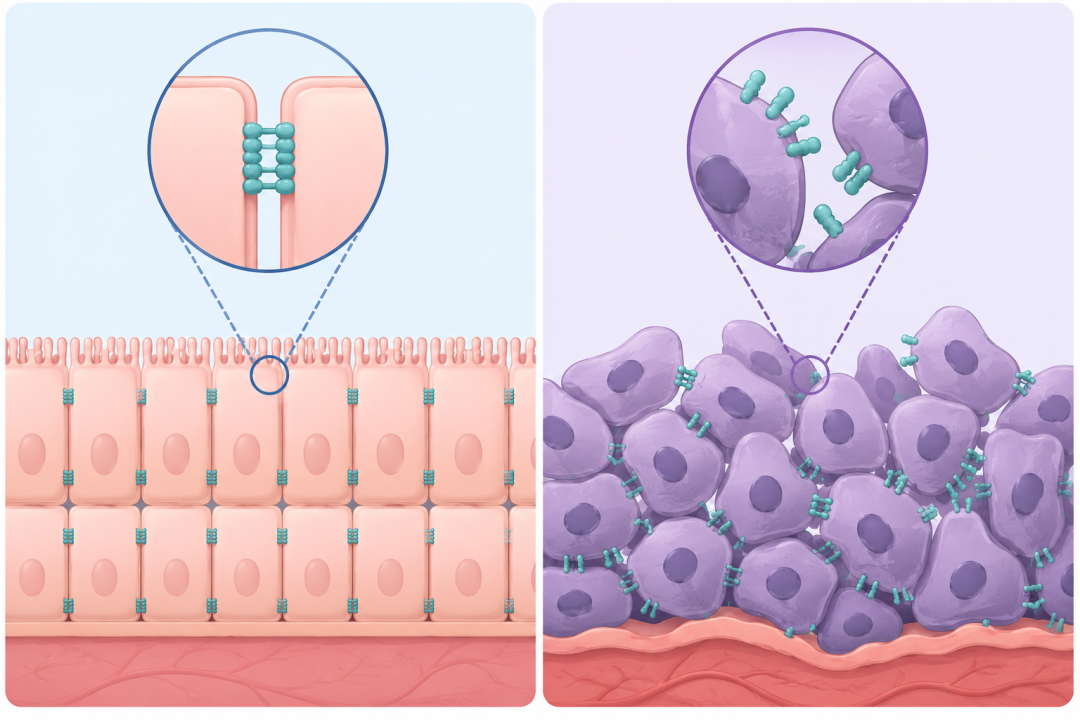
Research suggests that, compared with HER2, CLDN18.2 may cover a broader population of gastric cancer patients. But for Chen Li in 2022, "CLDN18.2-positive" was still just a few characters on a test report. The family could only keep waiting.
The chance they waited three years for finally came
For patients with advanced gastric cancer like Chen Li, every new treatment modality can mean a new chance. Over the past decade, research around CLDN18.2 has advanced steadily. In 2016 the phase II FAST study reported results and brought the target wide attention; since then monoclonal antibodies, bispecific antibodies, antibody-drug conjugates (ADCs) and CAR-T approaches against CLDN18.2 have entered development and clinical exploration. Chinese investigators and institutions have taken part in more and more of the related international studies, giving domestic patients greater access to innovative treatment.
It was against this background that Zhang Kaiming learned from a patient community that the team of Prof. Zhou Jun at Shanghai GoBroad Cancer Hospital, affiliated to China Pharmaceutical University, was running clinical research on new therapies for gastric cancer. He decided to bring his wife for one more try.
In December 2024, Prof. Zhou met Chen Li and Zhang Kaiming for the first time. He still remembers that consultation. "Whatever I said, Zhang Kaiming showed almost no expression. I could feel that he knew perfectly well the patient was in a critical stage — he was just holding on to one last hope."
Unfortunately, because of her very low body weight and incomplete intestinal obstruction, Chen Li did not meet the enrolment criteria of the study at that time. But before they left, Prof. Zhou told Zhang Kaiming:
"The window is short, but there is still a chance."
That sentence made them decide to keep waiting. This time, they did not wait long. In early 2025, precision treatment of gastric cancer in China took another step forward: a new treatment option for CLDN18.2-positive gastric cancer was approved, opening a new possibility for patients who previously lacked suitable targeted options.
Zhang Kaiming told his wife immediately: "The drug is almost here. Hold on — we have waited three years, a few more days won't matter."
After coordination and a full assessment, Prof. Zhou's team secured an early treatment slot for Chen Li. In February 2025, treatment formally began.
By then Chen Li weighed just over 30 kg and was close to being fully dependent. Long-term disease wasting, nutritional problems after total gastrectomy and multiple prior lines of therapy made it very difficult for her to follow a standard treatment rhythm. How to actually deliver the drug while keeping her body able to tolerate it became the key question for the team.
Taking her disease status, physical condition and treatment history into account, the team designed an individualised regimen and adjusted the treatment rhythm dynamically according to response and tolerance, keeping adverse effects within a manageable range.
The change came faster than expected. A little over a week into treatment, bowel function was the first to recover. As the gastrointestinal lesions shrank, the obstruction gradually eased and the pain slowly lessened. After the second cycle in March she could eat some semi-solid food, and occasionally a little minced meat or shrimp. Her body was recovering, bit by bit.
As treatment continued, Prof. Zhou noticed that Zhang Kaiming had changed too. At the first clinic visit he was silent and wooden, saying very little. Later he began to talk with the doctors on his own initiative, his face grew more expressive, and sometimes he even made jokes. The days that the disease had put on pause were finally moving forward again.
From "a drug exists" to "finding the right patient for it"
The change in Chen Li's family made Prof. Zhou feel more strongly than ever that, as precision treatment of gastric cancer advances, patients who once had few effective options are gaining new chances. But bringing a new treatment to patients is not simply a matter of "a drug being available". What matters more is whether the patients suited to that treatment can be identified promptly and accurately.
Zhang Kaiming still remembers that when he first saw "CLDN18.2-positive" on a report two years earlier, he had no idea what it meant. As CLDN18.2-targeted therapy entered the clinic, testing became more important. Different institutions may have used different antibodies, workflows and interpretation standards, so establishing a more standardised, unified testing system became a key step in selecting suitable patients.
That is changing. In 2025 the Expert Consensus on Clinical CLDN18.2 Testing in Gastric Cancer (2025 edition) was published, further standardising testing and positivity criteria; in February 2026 a companion diagnostic reagent related to CLDN18-targeted therapy was approved in China. From discovering the target and developing the drug to establishing testing standards and identifying suitable patients, the precision diagnosis and treatment system for gastric cancer is steadily maturing.
And while innovative treatment keeps advancing, one thing must not be overlooked: detecting gastric cancer as early as possible. In China a considerable share of gastric cancer patients are still locally advanced or metastatic at diagnosis, and long-term survival in advanced disease remains a major challenge.
Gastric cancer is easily "found late", partly because the disease itself is insidious. Early gastric cancer often lacks typical symptoms; some patients only have upper abdominal discomfort, reduced appetite or belching, which is easily mistaken for ordinary indigestion. The other reason is insufficient screening awareness: repeated stomach pain and discomfort relieved with medication, or no obvious symptoms and therefore no perceived need for a check-up — by the time marked weight loss, persistent pain or difficulty eating appear, the disease may already have progressed.
For people at high risk of gastric cancer, it is therefore important to pay attention to long-standing or recurrent gastric discomfort and to undergo gastroscopy and related tests as advised by a doctor. This applies especially to those over 40 who also have risk factors such as Helicobacter pylori infection, chronic atrophic gastritis, gastric ulcer, gastric polyps or a family history of gastric cancer.
Getting life back, one day at a time
Chen Li's own life is coming back, little by little. One morning in December 2025 she suddenly said she wanted pan-fried buns. Zhang Kaiming bought six from the hospital canteen. She sat there and ate them slowly, one by one, with nobody hurrying her. In the end, she finished four.
For someone for whom eating normally had become a luxury, this most ordinary of breakfasts carried an entirely different meaning.
"One step at a time, and see." It is the sentence Zhang Kaiming has said most often over the past four years. "Time accumulates in segments. You can't look back — you can only keep walking forward."
Recently he has started talking with his wife again about their old plan: once she is a little stronger, the two of them will get in the car and travel around the country. The idea, shelved by illness for so long, has been picked up once more.
References: 1. Jing X, Luo Z, Wu J, et al. Cancer Med. 2023;12(24):21905-21919. 2. Huang D, Lu N, Fan Q, et al. PLoS One. 2013;8(11):e80290. 3. Shitara K, Xu RH, Ajani JA, et al. Gastric Cancer. 2024 Sep;27(5):1058-1068. 4. Chen Y, Jia K, Xie Y, et al. The current landscape of gastric cancer and gastroesophageal junction cancer diagnosis and treatment in China: a comprehensive nationwide cohort analysis. Content source: Southern Weekly.
Treatment timeline
- 18 Jan 2022Gastroscopy suggested an early tumour; surgery revealed far wider invasion and a total gastrectomy was performed. Pathology: poorly differentiated gastric adenocarcinoma with distant metastasis.
- 2022Immunohistochemistry: HER2-negative, CLDN18.2-positive. No targeted option available; started chemotherapy plus immunotherapy.
- 2023Disease stable for less than a year; immune-related pneumonitis ("white lung") forced immunotherapy to stop. Lymph node dissection failed and liver metastasis appeared.
- Apr 2024Intestinal obstruction, peritoneal metastasis, ureteric stricture and hydronephrosis; unable to eat, on intravenous nutrition; ascites and jaundice with bilirubin up to 300 μmol/L.
- Dec 2024First consultation with Prof. Zhou Jun at Shanghai GoBroad Cancer Hospital. Too underweight and obstructed to enrol in the study, but told: "The window is short, but there is still a chance."
- Early 2025A new treatment option for CLDN18.2-positive gastric cancer was approved in China; the team secured an early treatment slot after full assessment.
- Feb 2025Individualised CLDN18.2-targeted therapy began at a body weight of just over 30 kg, with dose and rhythm adjusted to tolerance. Bowel function recovered after about a week.
- Mar 2025After the second cycle, lesions had shrunk and the obstruction eased; she could take semi-solid food and occasionally minced meat or shrimp.
- Dec 2025One morning she asked for pan-fried buns and slowly finished four of the six — an ordinary breakfast with an entirely different meaning.
About the specialist
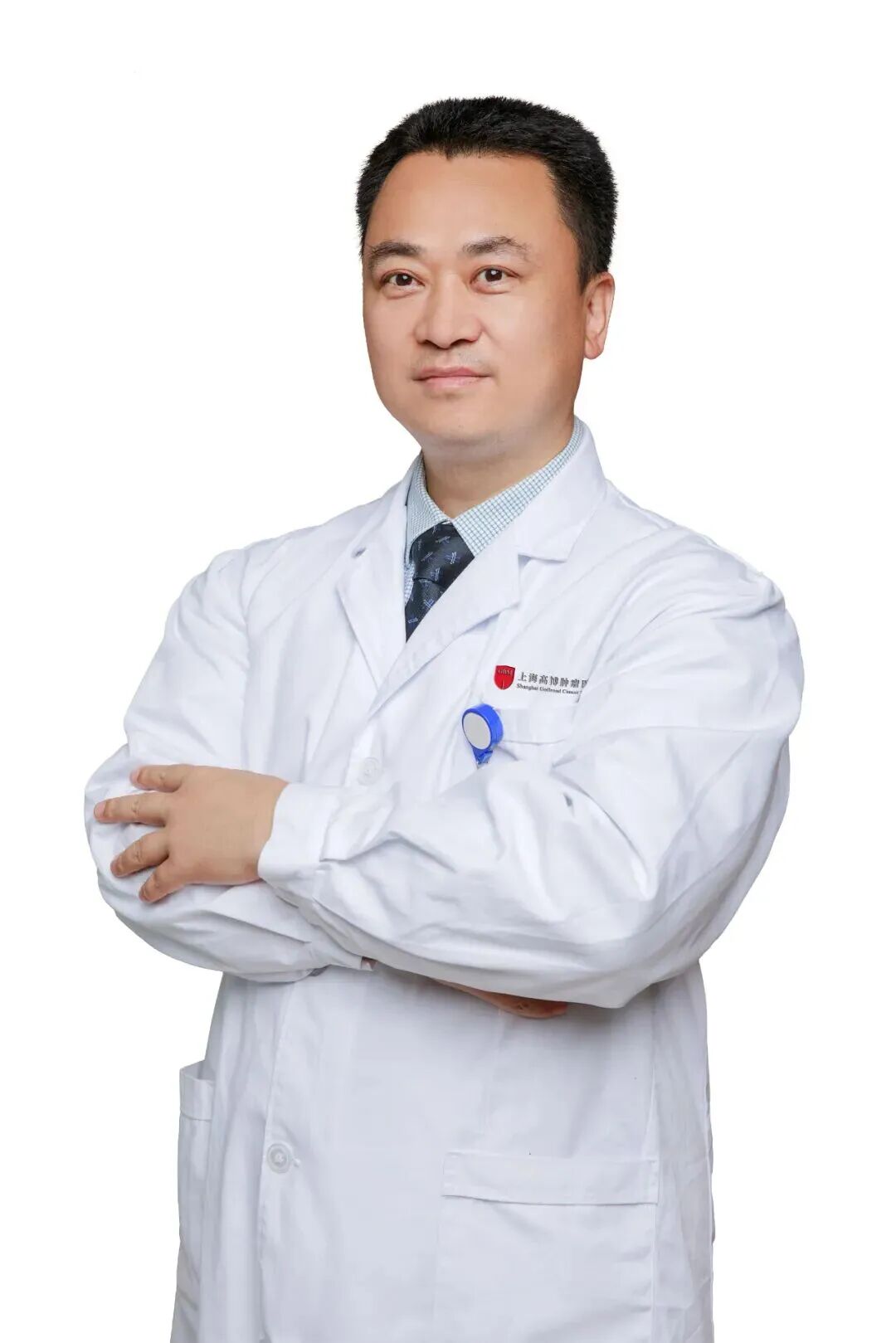
Prof. Zhou Jun — Medical Vice President and Director of Gastrointestinal Oncology, Shanghai GoBroad Cancer Hospital, affiliated to China Pharmaceutical University
- · Chief physician and master's supervisor; formerly chief physician at Shanghai East Hospital, Tongji University.
- · Specialises in gastrointestinal tumours — cell therapy, molecular targeted therapy and immunotherapy for gastric, colorectal and hepatobiliary-pancreatic malignancies, and clinical research on new anti-cancer drugs.
- · Named among the fifth cohort of "People's Renowned Physicians".
- · Board member of the Chinese Society of Clinical Oncology (CSCO); standing committee member of the CSCO Gastric Cancer Expert Committee.
- · Member of the CSCO expert committees on colorectal cancer, biliary tract cancer, interventional radiotherapy and smart healthcare.
- · Standing committee member of the anti-tumour drug clinical research committee of the China Pharmaceutical Innovation and Research Development Association.
- · Editorial board member of the Journal of Clinical Oncology (Chinese).