01
No exit dose — spare healthy tissue
Conventional photon (X-ray) radiotherapy deposits dose both entering AND leaving the body. Protons stop at the tumor, cutting integral dose to surrounding organs by 50–70%.
Proton beam therapy is the most precise external radiotherapy available. Because protons deposit their energy at a defined depth — the Bragg peak — and then stop, the tumor receives a curative dose while surrounding healthy organs receive dramatically less radiation than with conventional X-ray treatment.
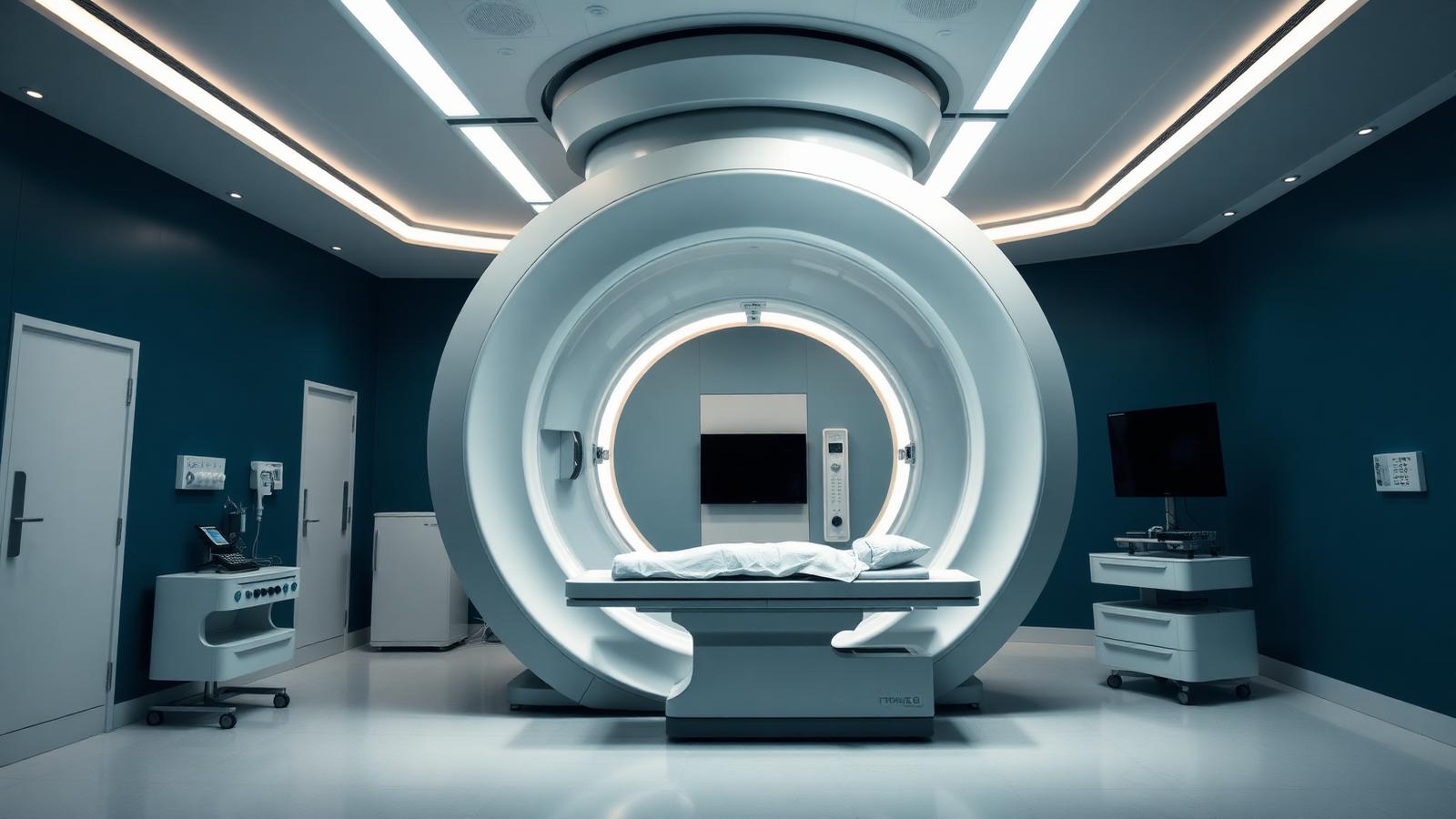
The unique physics of the proton — a heavy, positively charged particle — makes it the most tissue-sparing form of radiotherapy in clinical use.
Hydrogen atoms are stripped to protons and accelerated to ~60% the speed of light in a cyclotron or synchrotron.
A magnetic steering system paints the tumor slice by slice with millimetre-precision proton spots — the modern IMPT technique.
Unlike X-rays, protons deposit almost all of their energy at a controllable depth (the Bragg peak) and then stop — no exit dose beyond the tumor.
Daily CT / CBCT verification and, at newer centres, real-time MRI or PET adaptive planning ensure the beam matches the tumor day by day.
Treatment is typically 15–35 painless outpatient sessions of 15–30 minutes each — no incision, no anaesthesia for most adults.
Conventional photon (X-ray) radiotherapy deposits dose both entering AND leaving the body. Protons stop at the tumor, cutting integral dose to surrounding organs by 50–70%.
Especially important for children and young adults, where reduced dose to healthy tissue translates into significantly lower long-term risk of radiation-induced malignancies.
Reduced dose to heart, lung, bowel, salivary glands, brain and spinal cord means less fatigue, less mucositis, better cognitive preservation and better organ function.
For recurrent tumors in patients who have already received the maximum photon dose, protons can safely re-treat targets that would otherwise be inoperable.
Higher biological doses can be delivered to sarcomas, chordomas, hepatocellular carcinoma and pancreatic cancer while staying under normal-tissue tolerance.
Over the past decade China has built one of the world's largest and most modern proton therapy networks — with shorter wait times and significantly lower cost than Western centres.
Every referral is reviewed by a proton MDT — treatment is recommended only where the physics offer a clinical advantage over conventional radiotherapy.
Free Case Feasibility Assessment
Based in Hong Kong and serving international patients, Privilege Medical bridges you to leading Class 3A and JCI-accredited hospitals in mainland China. We do not provide medical care directly — we coordinate specialist matching, medical visa support and on-the-ground concierge from your first enquiry to post-treatment follow-up.
Complete the form below. Our coordination team responds within 1–2 business days with a complimentary assessment covering clinical feasibility, specialist matching and an indicative admission timeline.
Privacy Notice
Privilege Medical is a Hong Kong–based medical concierge and does not provide clinical care. Personal data and medical information you submit are collected, held and used strictly for the purposes of case assessment, specialist matching and coordination of medical services in mainland China, in accordance with the Personal Data (Privacy) Ordinance (Cap. 486) of Hong Kong.
Your data may be transferred to our partner hospitals, treating clinicians and authorised service providers (including translators and travel coordinators), some of whom are located outside Hong Kong. We take reasonable steps to keep your information confidential and secure, and we do not sell your data to any third party.
You have the right, under the PDPO, to request access to and correction of the personal data we hold about you, and to withdraw consent at any time by writing to service@privilegemedical.com. Information submitted via this form is not encrypted end-to-end; please avoid including highly sensitive identifiers (e.g. ID numbers) in the free-text fields.